The Arrangement(s)
Artist: Marina Marković
Salon MoCAB, Belgrade, June 2024
READ CURATORIAL CONCEPT
Pisati sebe[1]
Ne umem sebi da objasnim kako izgleda ništa ali jednom sam ga sanjala. Spoljašnji svet je odjednom postao zatvoren, iz njega nije dopirao ni najmanji nadražaj, i dok sedim na ulici u gradu koji ne poznajem, mrak sopstvenog tela postaje sve veći jer se ono više ne povezuje ni sa čim. Živeti pre svega znači biti telesan, a to podrazumeva čitav registar senzacija, spektar mogućnosti, dijapazon nadražaja koje primamo iz okoline, te su sva naša svakodnevna iskustva čulna. U tom smislu čini se da je vreme u kome živimo neverovatno. Živimo u trenutku prevlasti haptičkog, i dok verujemo da vizuelno mami i preovlađuje, skraćuje pažnju i odvlači fokus, mi zapravo neprestano opipavamo svet oko sebe. Dodirujemo tastature vrhovima prstiju, klizimo jagodicama po ekranima, otključavamo otiskom prsta, kružimo po touchpadu, klikćemo jednom klikćemo dva put. Naši prsti su postali neverovatno vešti i brzi dok ispisujemo haptičke mape dnevnih kretanja, još uvek nesvesni koliko nam znači dodir. Dodir je sinonim za intimnost, i dok ostala čula imaju mogućnost da savladaju daljine i štaviše pomažu nam u tome, dodir je jedino vredan, a i moguć izbliza. Nadmoćan i razmetljiv u površini koju pokriva i senzacijama koje budi, dodir je priča o jednakosti i kolaboraciji jer dodirnuti uvek znači istovremeno i biti dodirnut (Montagu)[2].
Jezik kojim se Marina služi je upravo ovaj, jezik korporealnog. Preko sopstvene kože uspostavlja vezu između tela i njegove stvarnosti, prihvatajući da jasna granica između spoljašnjeg i unutrašnjeg sveta zapravo i ne postoji. Ona je ugrožena, konstantno erodira, ispira se, nekada i kolabira pod pritiscima koji dolaze spolja, i ono što odeljuje biološke impulse od društvenih pritisaka je ne samo krhko i nežno, već i za nas same često krajnje nevidljivo. Sve što jesmo pulsira, protiče, diše u membrani iz koje je jedini izlaz kroz nju. Osetiti kožom, doživeti kroz nju, upiti i izvrnuti nazad, vratiti u stvarnost ono što smo iz nje dobili, samo profilterisano, izmenjeno, drugačije. Marinina praksa zasnovana je na prividnom ogoljavanju sopstva, zarad temeljnog ogoljavanja struktura koje subjekat drže u iluziji vezanosti za određeni društveno očekivani model ponašanja, i kroz različite forme potčinjenosti i dominacije u odnosu na žensko telo autorka preispituje tananu granicu između slobodne volje i biopolitičke prinude u životu žene, granicu između ličnih izbora i pritiska društva, zahteva umetničkog tržišta, koristi institucija i pojedinaca.
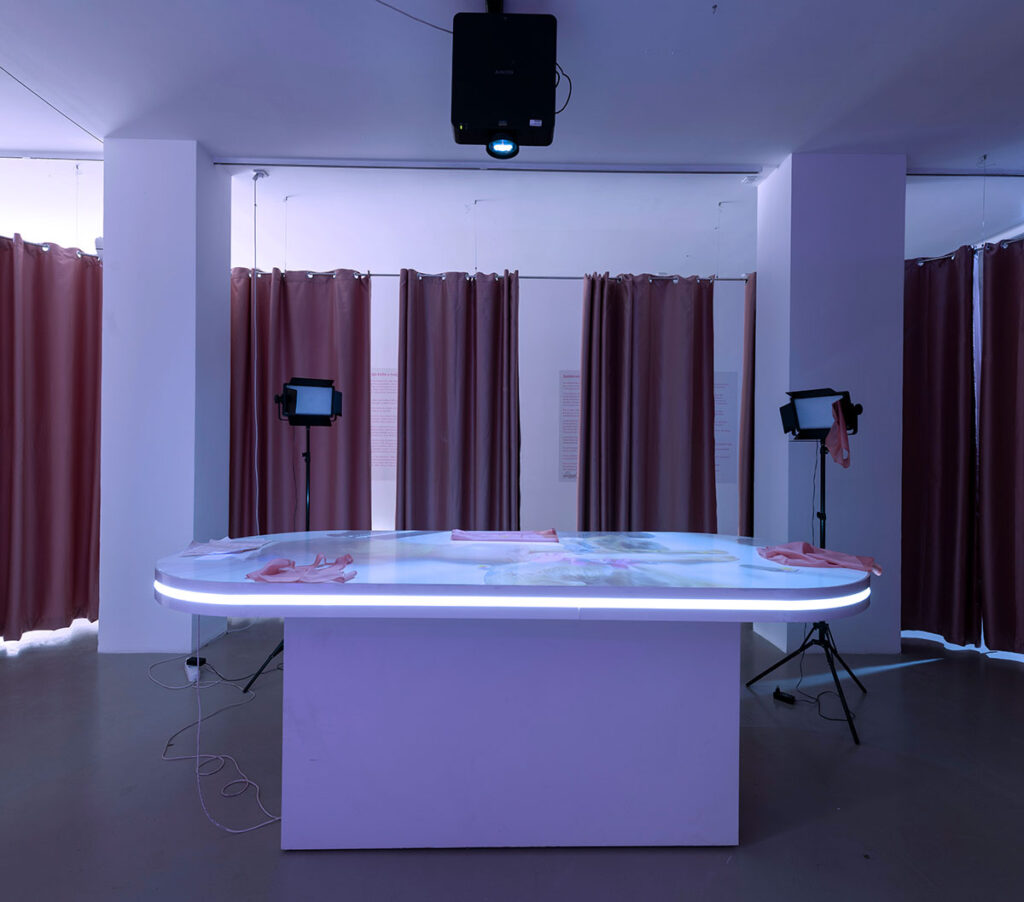
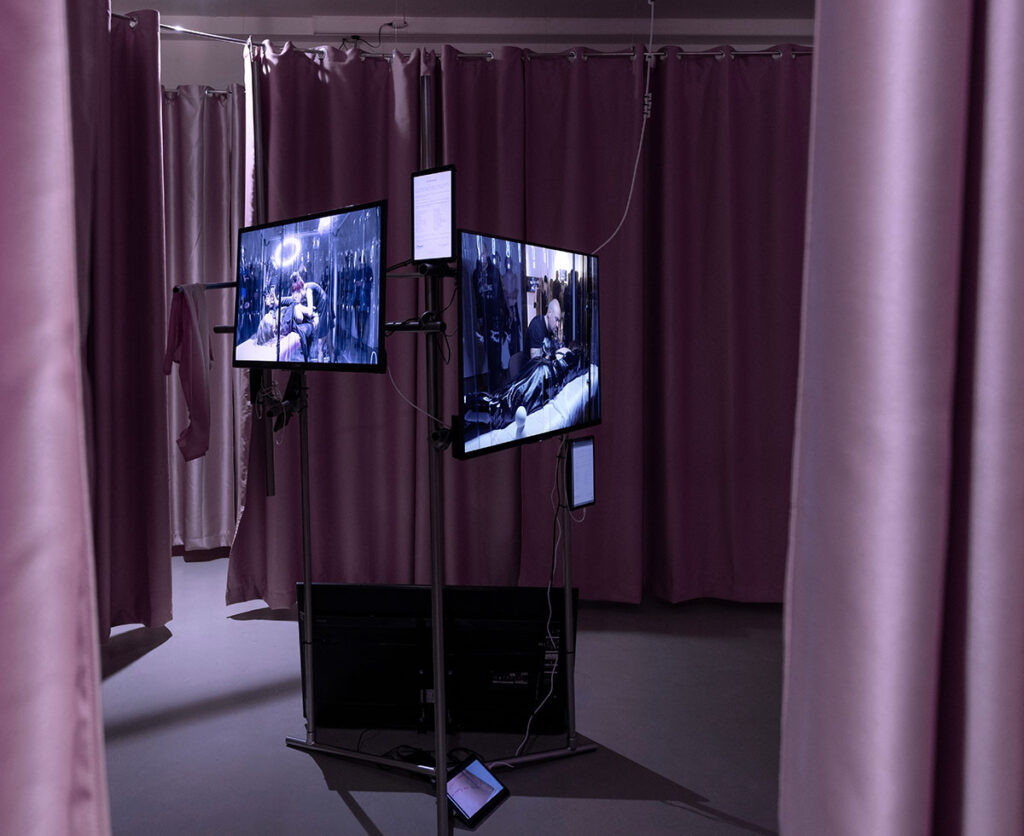
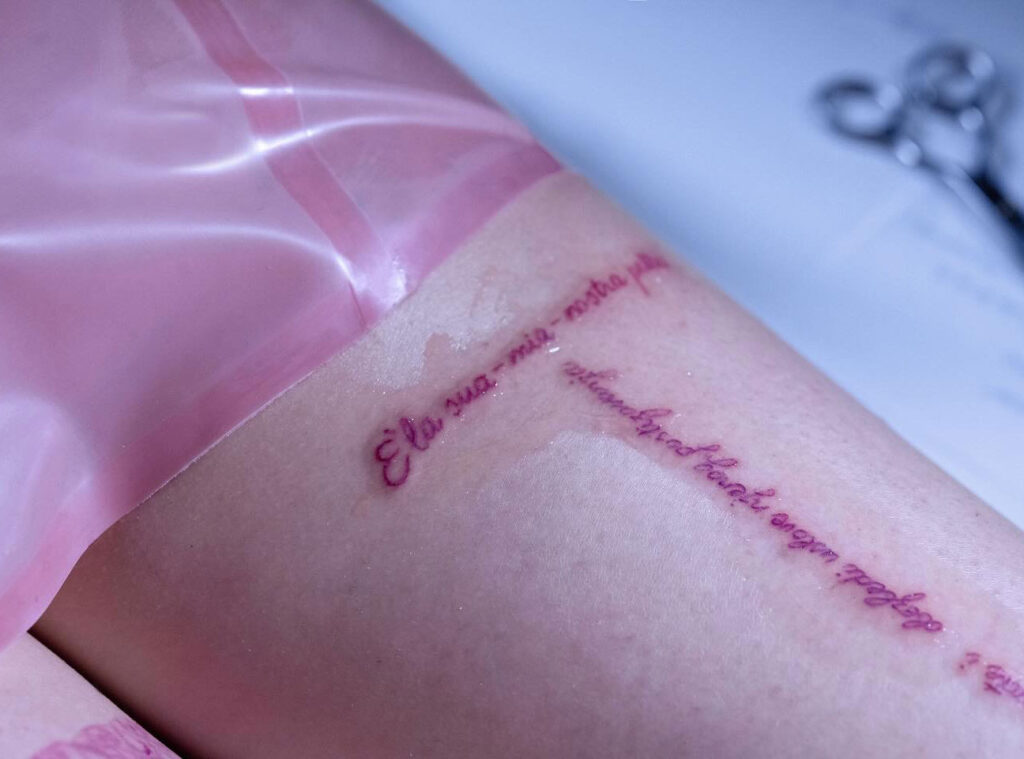
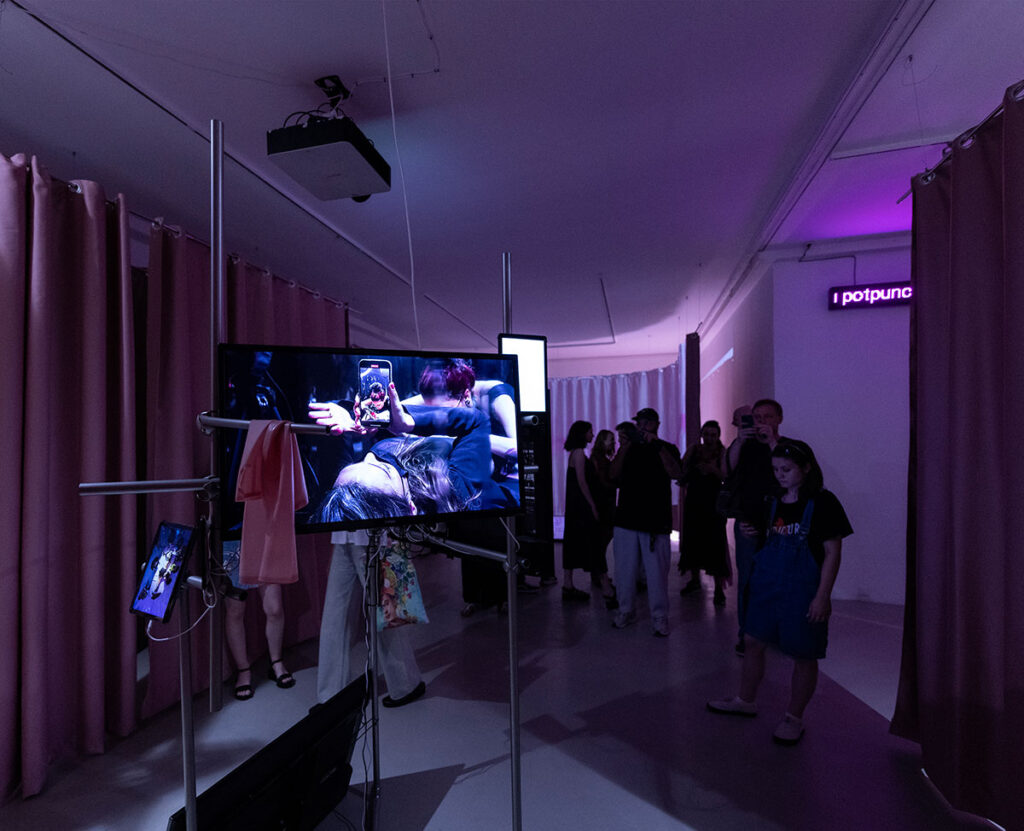
Na tom tragu nastaje izložba “The Arrangement(s)” u Salonu Muzeja savremene umetnosti u Beogradu, koja na izvestan način predstavlja završni deo serije performansa fokusiranih na pitanja odnosa moći u svetu umetnosti, u okviru umetničkog tržišta, institucionalnih politika ali pre svega moći u odnosu na žensko telo u koje uvlači posmatrača već samim prostorom koji preuzima karakteristike tela koje živi, pulsira i menja se konstantno. Kroz arhivu prethodnih performansa i potpisanih sporazuma, kao i novi performans nastao u saradnji sa teoretičarima umetnosti, Marina otvara pitanje različitih pozicija moći koje dolaze od spolja, svoje pozicije u okviru istog, inskripcija koje se upisuju u žensko telo, očekivanja od umetnika, istina koje se nameću, značenja u nastajanju. Kao što je anoreksija oblik protesta ulozi koja je dodeljena ženskom telu,[3] i suprotno uobičajenom mišljenju nije gubitak kontrole u cilju ispunjenja očekivanja ideala patrijarhata, već upravo suprotno njeno maksimalno preuzimanje ne bi li se oni u potpunosti odbacili, tako je i obeležavanje sopstvenog tela, pravljenje mape, vid uspostavljanja odnosa sa svetom u kom se živi, stvara, pregovara. U već poznatoj igri potpisivanja sporazuma, Marina je pozvala teoretičare umetnosti da napišu tekstove, koji su dekonstruisani da bi se od njih formirao metatekst – stejtment koji se tetovira na njenoj koži, poput teoretskog kaveza u koji se kalupi i kojim se potvrđuje permeabilnost granica, i dvostruka priroda moći koja se konstantno predaje i preuzima, a dodatno validira činom tetoviranja, tim simboličnim činom prodiranja egzorealnosti u endorealnost, prema unapred utvrđenim i dogovorenim pravilima. Biti umetnica nosi u sebi privilegiju gotovo beskrajne pojedinačne slobode, ali da bi se to postiglo treba da se izbori za takvu vrstu slobode, da joj se u potpunosti preda, i da pronađe i obezbedi uslove njenog postizavanja. Il rituale biologico del corpo come “campo di battaglia” sembra riscattare il corpo stesso da una dimensione di schiavismo, aberrazione, deformità, non conformità, autopunizione e masochismo concettuale. La peau est aussi un instrument social, support d’innombrables indices et de signes qui permettent d’affirmer comme de trahir notre identité. Elle conditionne notre rapport au monde. Il tocco predispone un incontro, un incontro sempre una riflessione. I authorise you to be me, I authorise myself to be you. È la sua-mia-nostra pelle.
Dok Marina dopušta da svi oko nje “čitaju”, “tumače”, “definišu”, “preispituju” njen rad, nemoguće je ne prisetiti se teksta Luce Irigaray. “Indiferentna si, umiri se. Kada se pomeraš uznemiravaš njihov poredak. Remetiš sve. Slamaš krug njihovih običaja, cirkularnost njihovih razmena, njihovog znanja, njihove želje. Njihov svet… Ti si indiferentna, beznačajna mala kutija, subjekt njihovih potreba. Dakle, oni misle da si indiferentna. Zar te to ne zasmejva?”[4]
Ležeći u centru prostora, na prvi pogled, ranjiva, ogoljena, izložena kako pogledima tako i fizičkom bolu koji joj se nanosi, u trenutku u koji narušava sve granice intimnosti, i u kome lično tako lako uklizava u javno, Marina podseća na ono što Newmahr govori kada govori o promeni razumevanja koncepta granice. Igranje na ivici je paradoksalano, subverzivno i konformistički, oslobađajuće i ograničavajuće, performativano i autentično[5], podrazumeva iskustvo ali i pre svega razumevanje da je jedino tu, na samoj granici gde se spoljašnje i unutrašnje susreću i razmenjuju, i gde pozicije klize neprestano klize uz i niz vertikalu moći, moguća promena percepcije. Marinina praksa se pojavljuje u tački u kojoj se susreću fizičke, društvene, normativne granice, granice sopstva i Drugog i podseća da je rad sa granicom duboko feministički čin koji podrazumeva svesnu saradnju sa njom.
[1] Parafrazirani citat “Piši sebe. Tvoje telo mora da se čuje” Cixous, Hélène “The Laugh of the Medusa”, Signs Vol 1, No 4, The University of Chicago Press, Chicago, Summer 1976, 875-893, 880.
[2] Montagu, Ashley, “Touching: The Human Significance of the Skin”, Fitzhenry & Whiteside Limited, Toronto, 1971
[3] Grosz, Elizabeth Volatile Bodies: Toward a Corporeal Feminism, Indiana University Press, 1994, 40
[4] Irigaray, Luce, This Sex Which is Not One, Cornell University Press, Ithaca, New York, 1985 207-208
[5] Newmahr, Staci, “Playing on the Edge Sadomasochism, Risk, and Intimacy”, Indiana Unversity Press, 2011, 168
Writing oneself[1]
I am not sure I could explain how nothingness feels like, but I dreamt of it once. The external world suddenly became closed off for me, devoid of any stimulus, and as I sit on the street in a city I do not recognize, the darkness of my own body grows larger because there is no sensuous connection with anything. To live primarily means to be embodied, which entails a whole range of sensations, a spectrum of possibilities, a range of stimuli that we receive from our environment, and therefore all our everyday experiences are sensory. In this aspect, the time we live in seems incredible.
We live in a moment of haptic dominance, and while we believe that the visual entices and prevails, shortening our attention and defocusing us, we are actually constantly touching the world around us. We touch keyboards with our fingers, slide across screens with our fingertips, unlock with a fingerprint, gently scroll on a touchpad, click once, click twice. Our fingers have become incredibly skillful and fast as we chart haptic maps of daily movements, still unaware of how much touch means to us. Touch is a synonym for intimacy, and while other senses have the ability to overcome distances and even help us with that, touch is precious and possible only up close, from the immediate vicinity. Ostentatious and lavish in the surface it covers and the sensations it arouses, touch is a story of equality and collaboration because “for to touch is always to be touched” (Montagu)[2]
The language Marina uses is precisely this, the language of the corporeal. Through her own skin, she establishes a connection between the body and its reality, accepting that the clear boundary between the external and internal worlds actually does not exist. It is threatened, constantly eroding, washing away, sometimes even collapsing under external pressures, and what separates biological impulses from social pressures is not only fragile and delicate, but often extremely invisible to us. Everything we are pulsates, flows, breathes within the membrane from which the only way out is through it. To feel with the skin, to experience through it, to absorb and give back to reality what we have received from it, only filtered, altered, different. Marina’s practice is based on the apparent exposing of the self, for the sake of fundamental exposing of the structures that keep the subject in the illusion of being tied to a certain socially expected model of behavior, and through various forms of subordination and domination in relation to the female body, the author questions the fine line between free will and bio-political coercion in a woman’s life, the boundary between personal choices and societal pressures, the demands of the art market, the benefits of institutions and individuals.
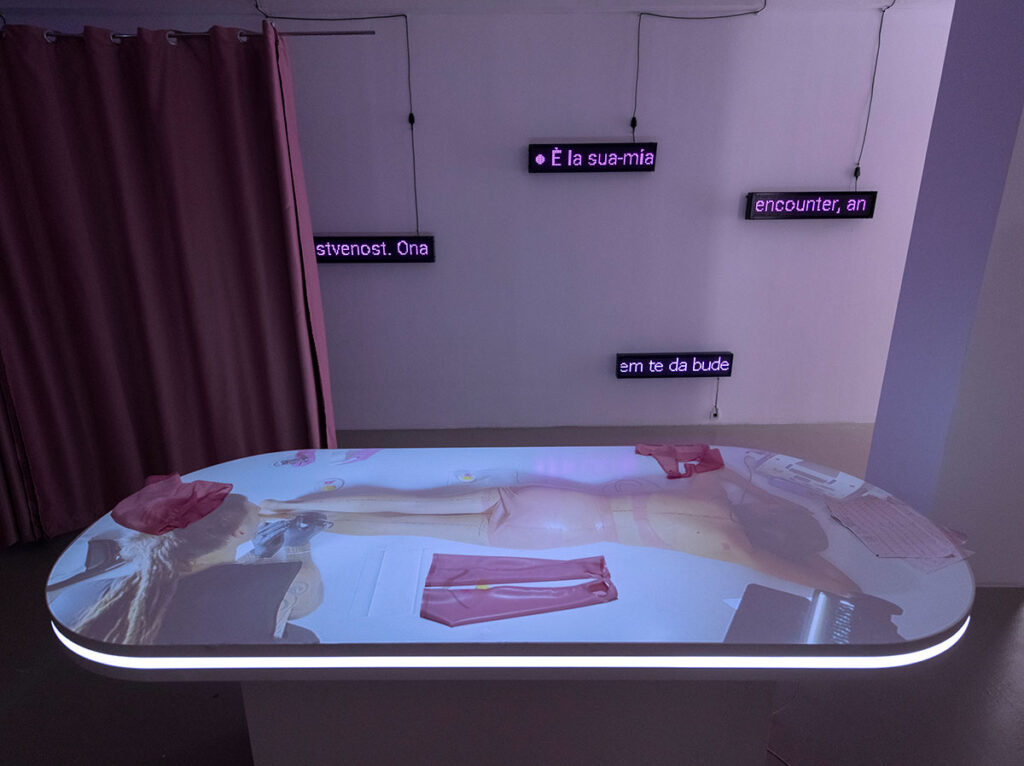
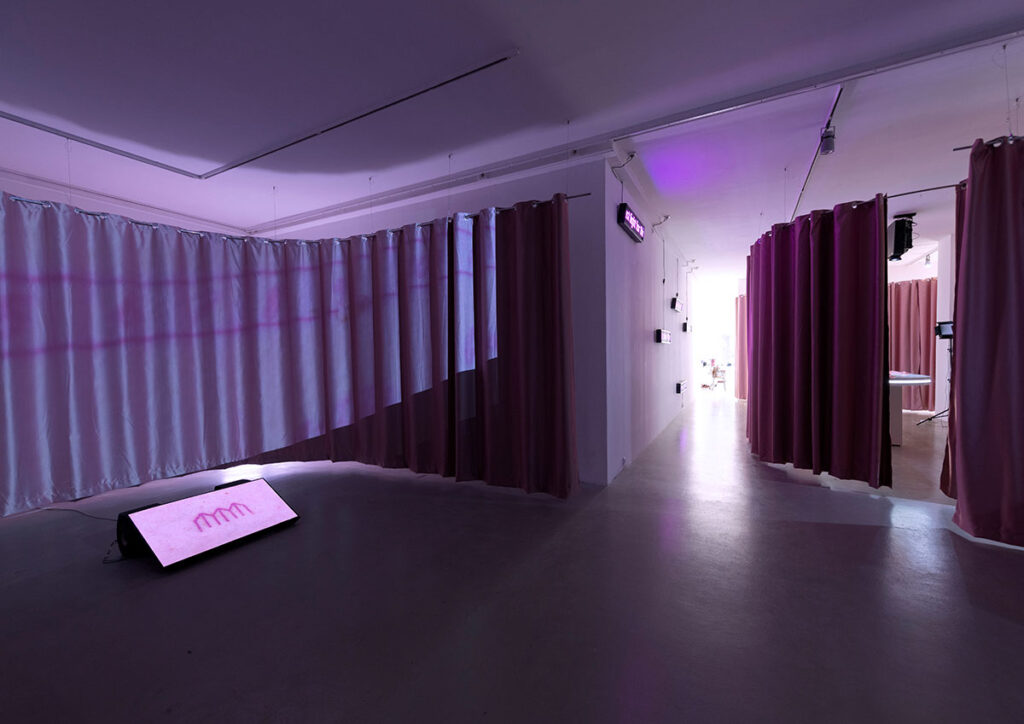
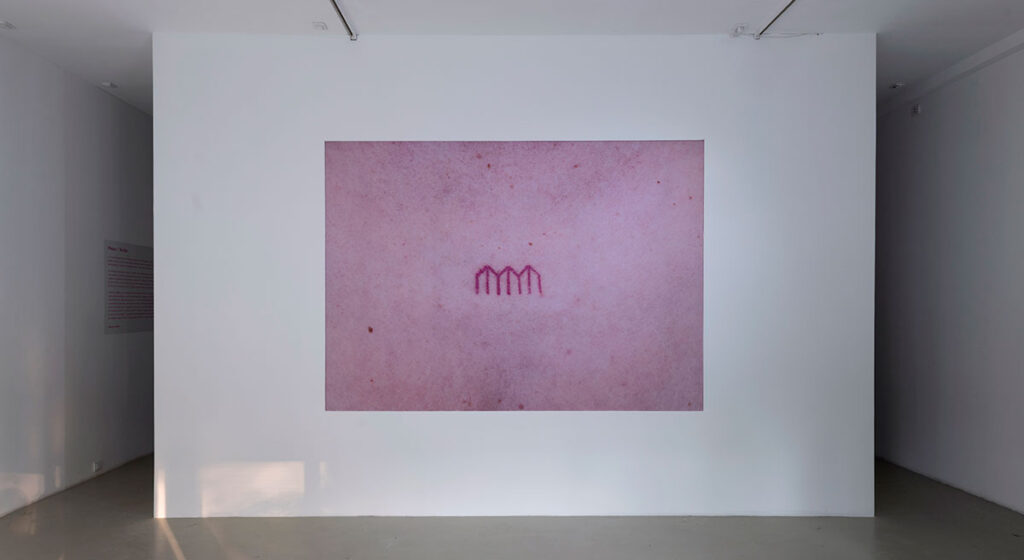
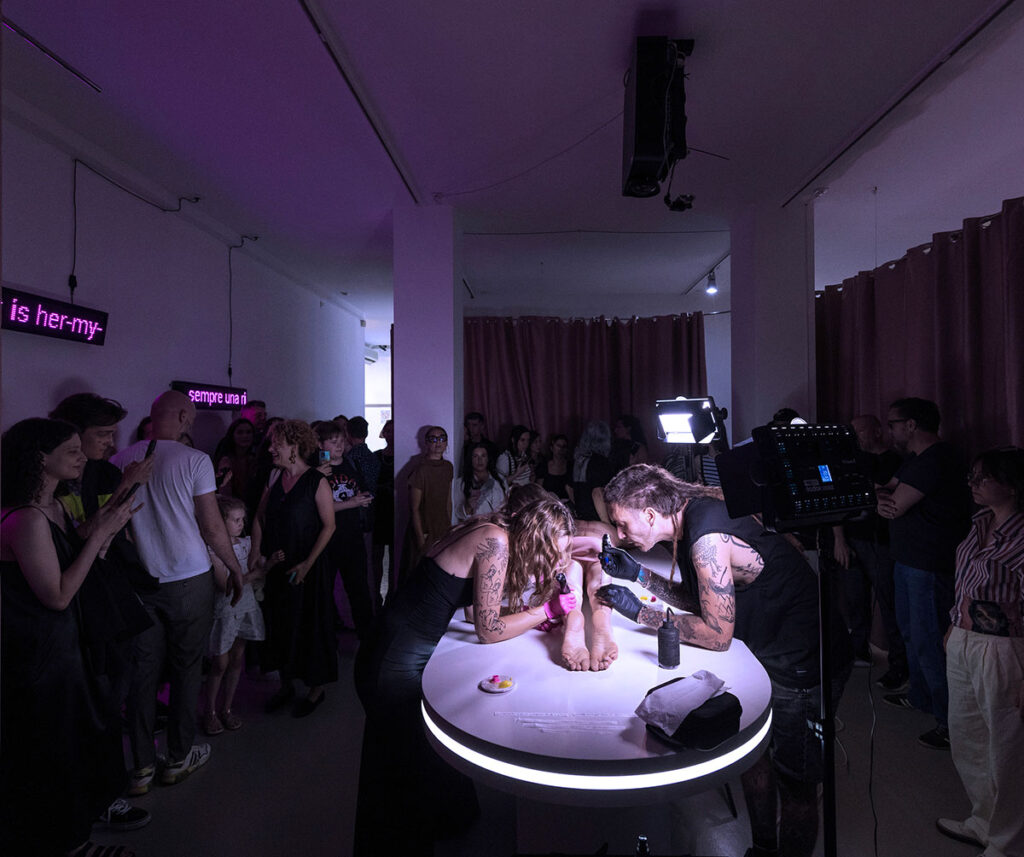
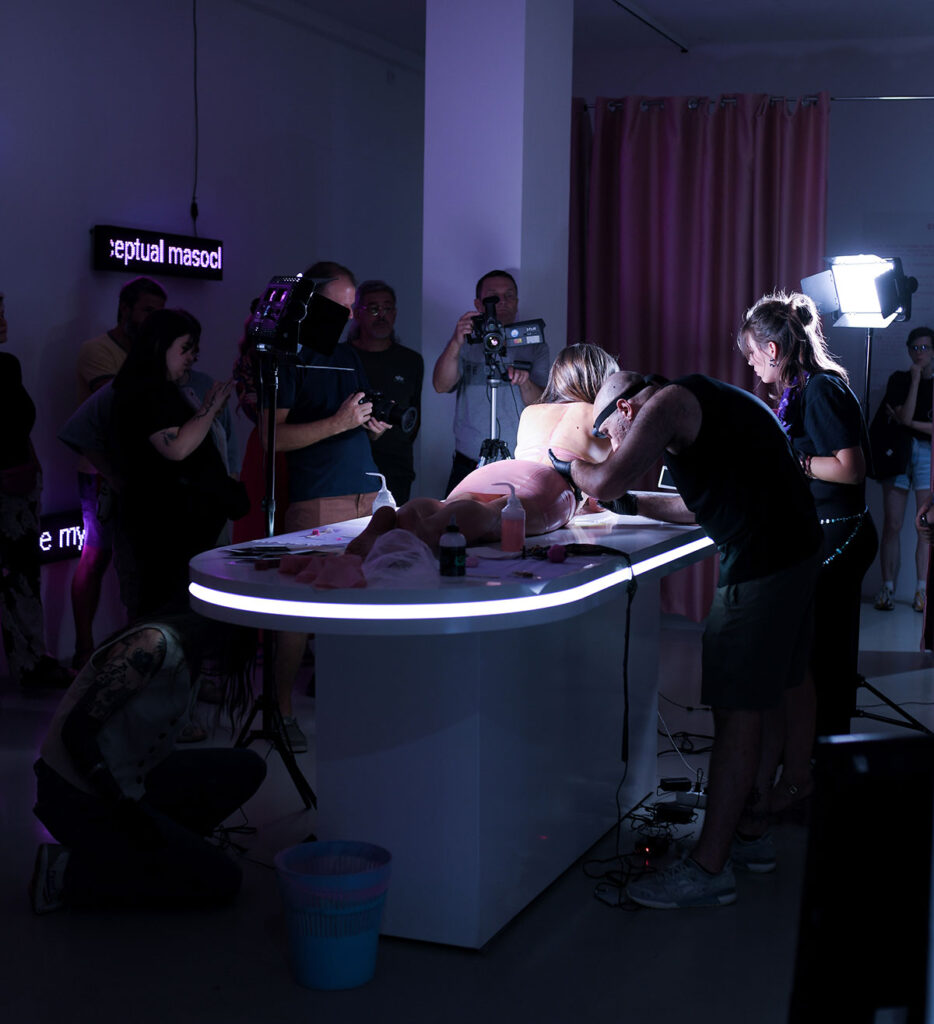
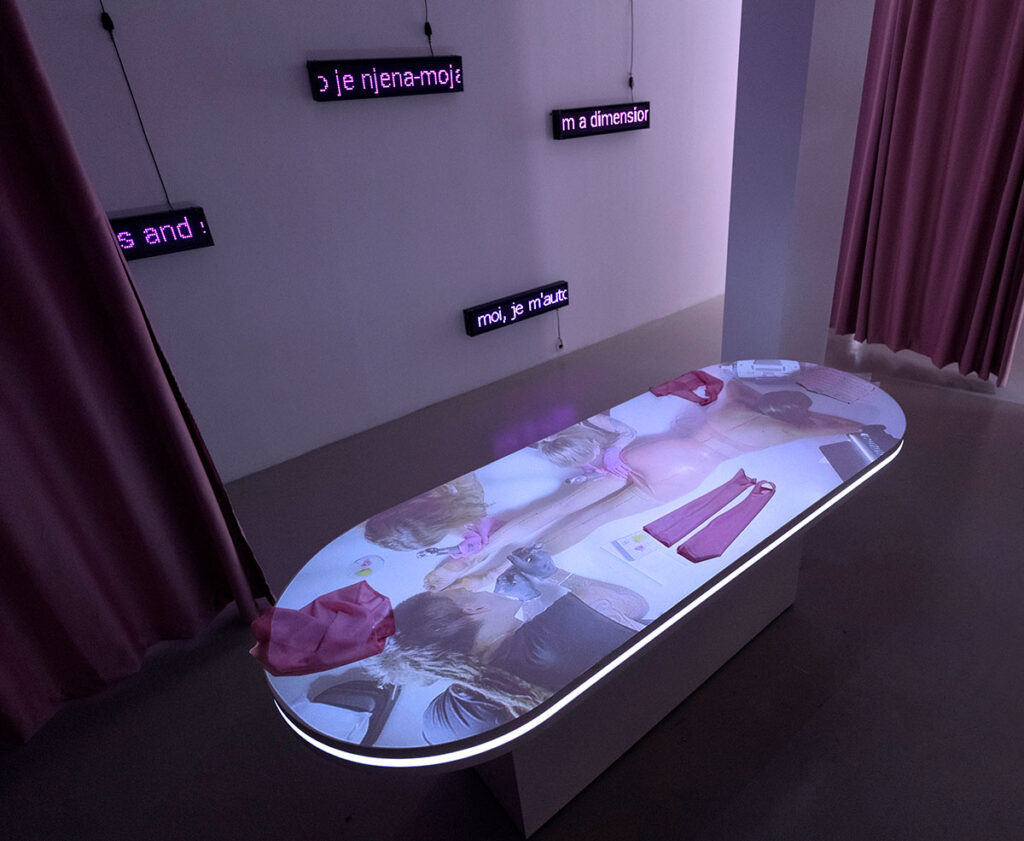
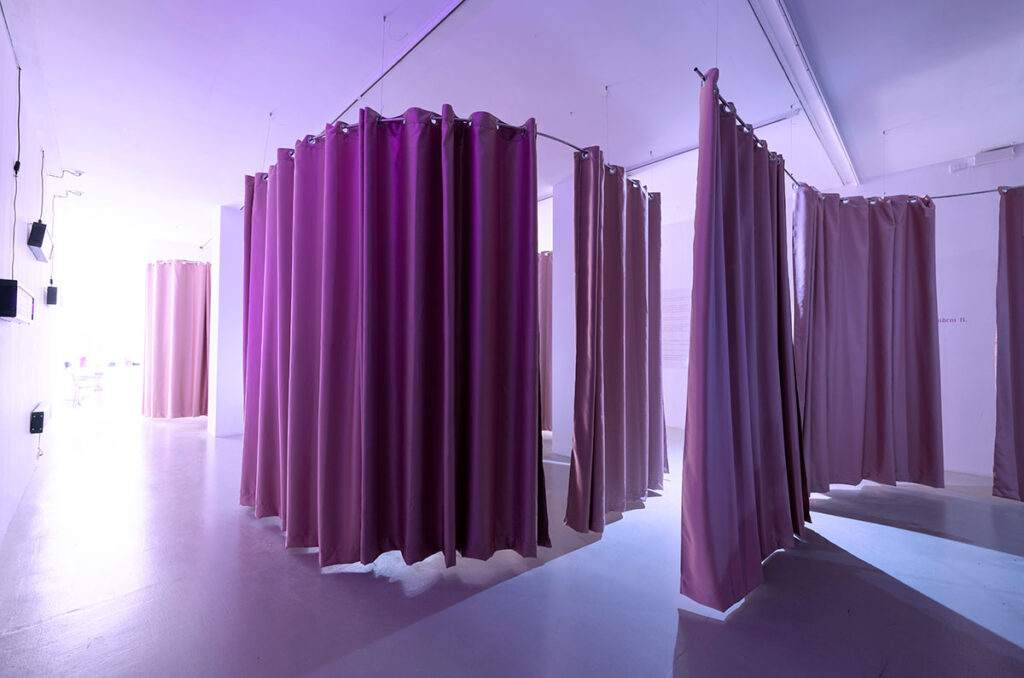
In that sense, the exhibition “The Arrangement(s)” at the Salon of the Museum of Contemporary Art in Belgrade emerges, in a way, as the final part of a series of performances focused on questions of power dynamics in the art world, within the art market, institutional policies, but above all power in relation to the female body that absorbs the viewer already through the space that takes on characteristics of a living, pulsating, and wavering body. Through an archive of previous performances and signed arrangements, as well as a new performance created in collaboration with art theorists, Marina raises the question of different positions of power that come from outside, her position within that structure, inscriptions that are inscribed on the female body, expectations of artists, truths that are imposed, meanings in the making. Just as anorexia is a form of protest against the role assigned to the female body, and contrary to common belief, not a loss of control in pursuit to fulfill the ideals of the patriarchy, but rather the maximum takeover in order to completely reject them[3], marking one’s own body, mapping it out, is a way of establishing a relationship with the world in which one lives, creates, negotiates.
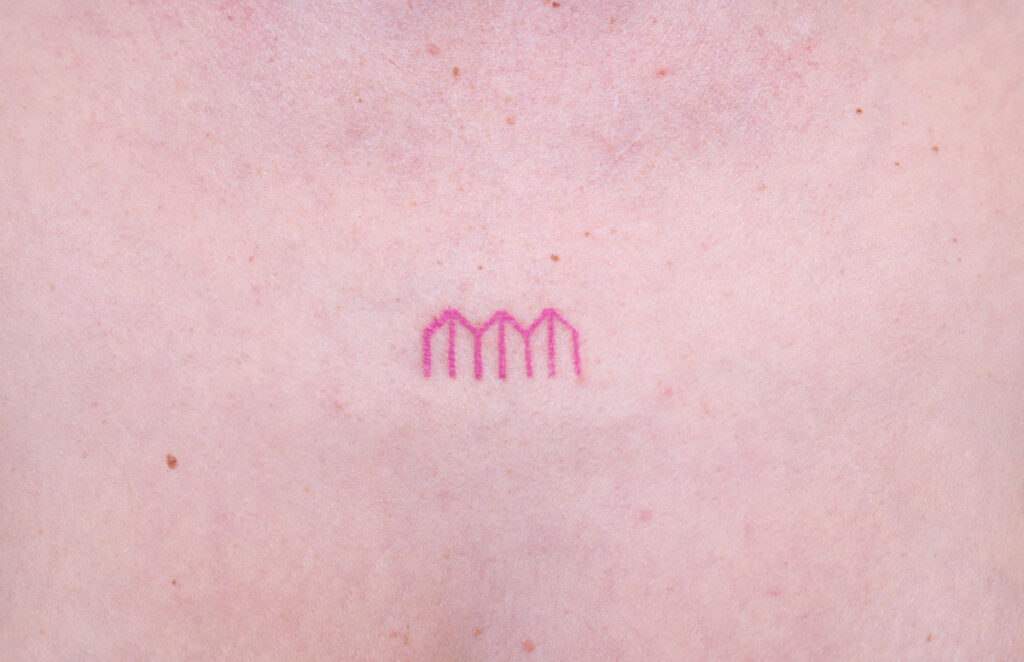
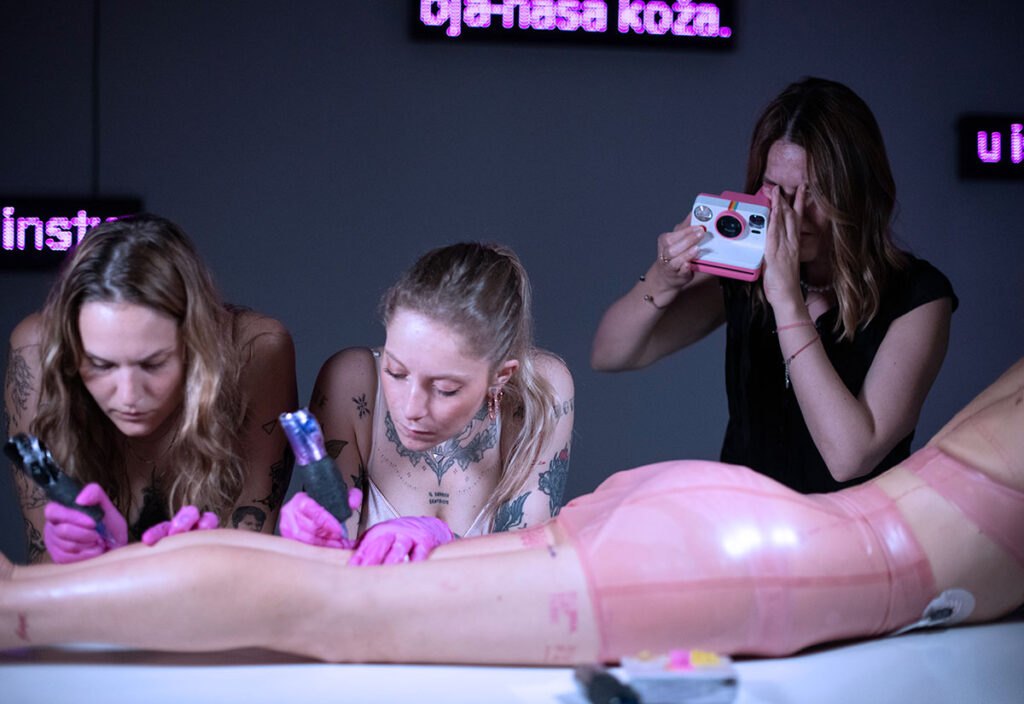
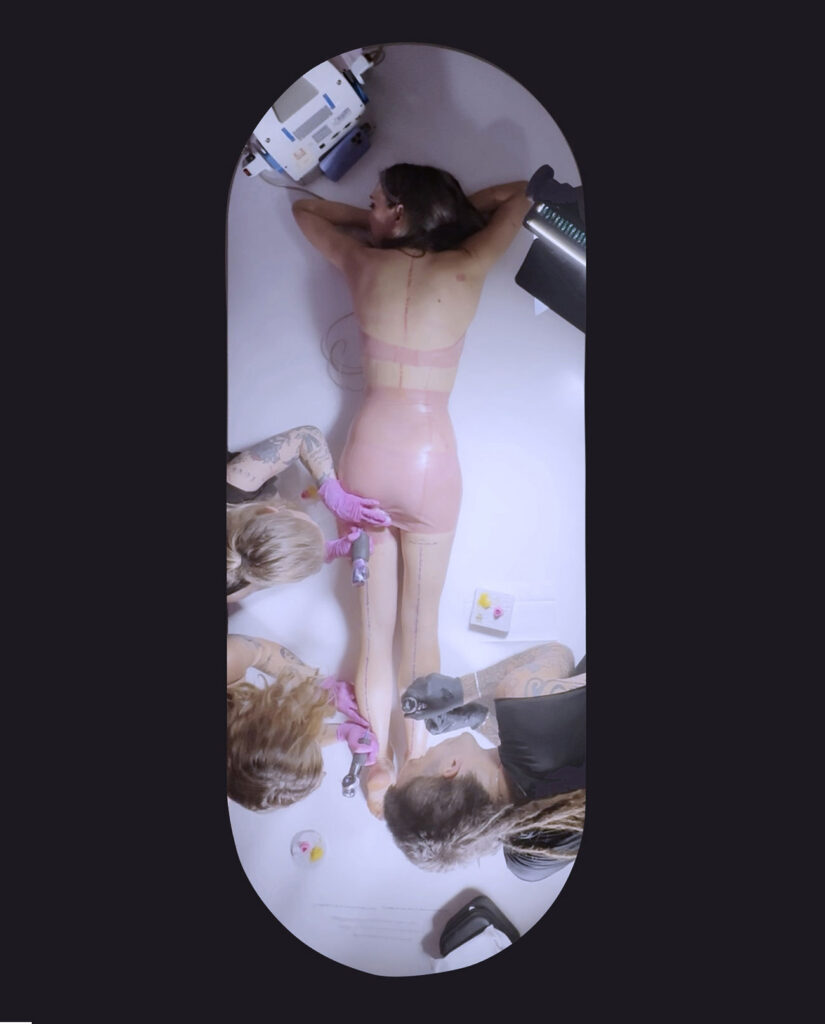
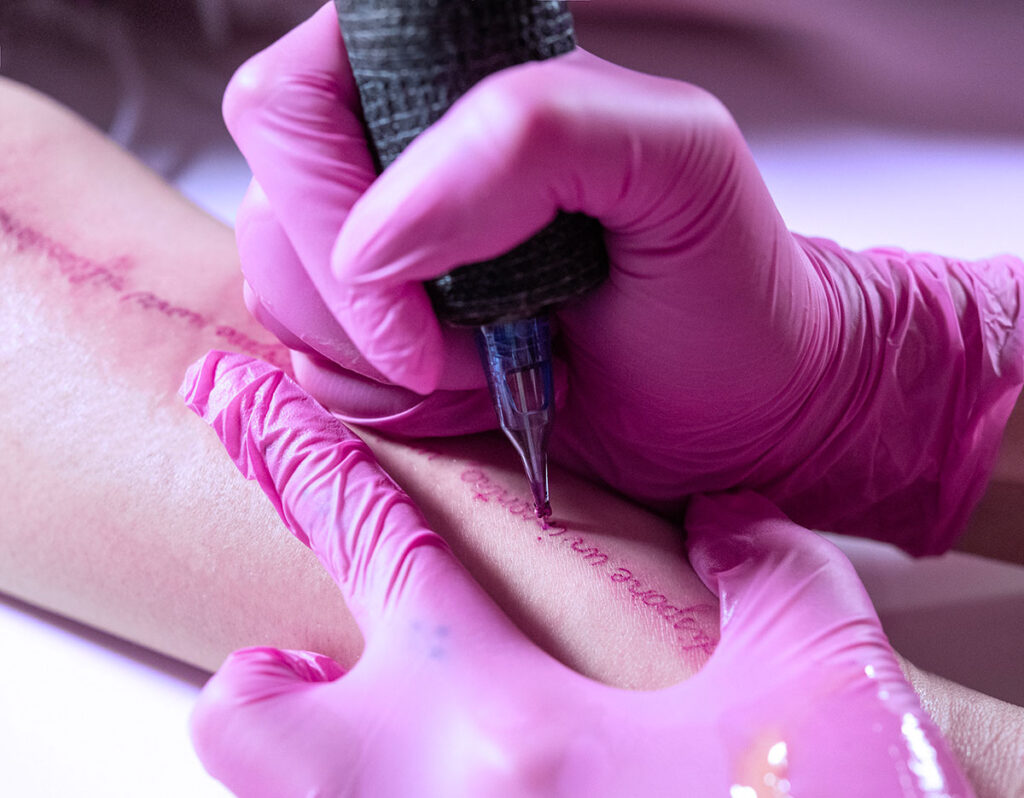
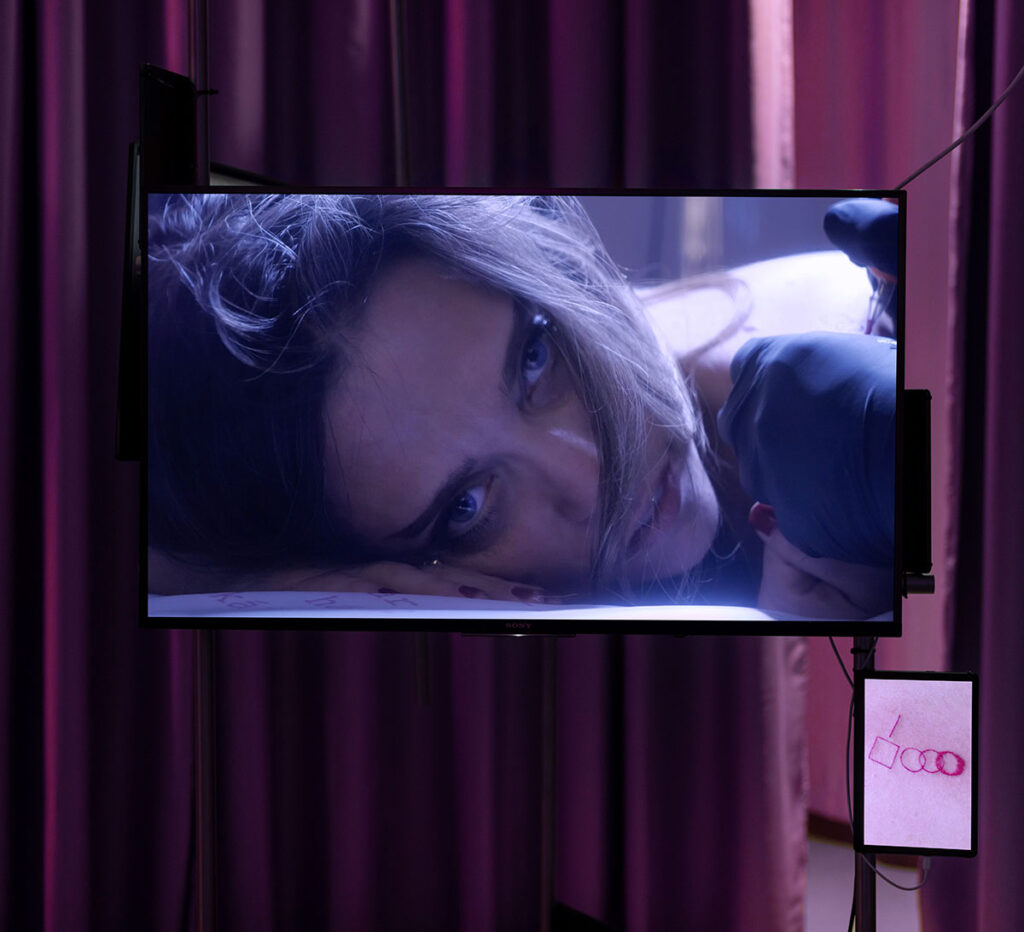
In the game of signing agreements, that she is already very familiar with, Marina invited art theorists to write texts, which were deconstructed to creat a metatext – a statement that is tattooed on her skin, like a theoretical cage that molds her and her practic, confirming the permeability of boundaries, and the dual nature of power that is constantly handed and taken over, further validated by the act of tattooing, a symbolic act of penetration of exo-reality into endoreality, according to predetermined and agreed-upon rules. Biti umetnica nosi u sebi privilegiju gotovo beskrajne pojedinačne slobode, ali da bi se to postiglo treba da se izbori za takvu vrstu slobode, da joj se u potpunosti preda, i da pronađe i obezbedi uslove njenog postizavanja. Il rituale biologico del corpo come “campo di battaglia” sembra riscattare il corpo stesso da una dimensione di schiavismo, aberrazione, deformità, non conformità, autopunizione e masochismo concettuale. La peau est aussi un instrument social, support d’innombrables indices et de signes qui permettent d’affirmer comme de trahir notre identité. Elle conditionne notre rapport au monde. Il tocco predispone un incontro, un incontro sempre una riflessione. I authorise you to be me, I authorise myself to be you. È la sua-mia-nostra pelle.
As Marina allows everyone around her to “read,” “interpret,” “define,” “question” her work, it is impossible not to recall the text of Luce Irigaray. “You are indifferent, calm down. When you move, you disturb their order. You disrupt everything. You break the circle of their customs, the circularity of their exchanges, their knowledge, their desires. Their world… You are indifferent, insignificant little box, the subject of their needs. So, they think you are indifferent. Doesn’t that make you laugh?”[4]
Positioned in the center of the space, at first glance, vulnerable, exposed both to gazes and the physical pain inflicted upon her, in a moment that violates all boundaries of intimacy, and in which personal so easily slips into the public, Marina is managing to take over control and reminds of what Newmahr speaks of when discussing the new understanding of the concept of boundary[5]. Playing on the edge is paradoxical, subversive and conformist, liberating and limiting, performative and authentic. It involves experience but above all an understanding that it is only there, on the limit, on the very edge, where the external and internal meet and exchange, and where positions constantly slide up and down the vertical axis of power, where a change in perception is possible. Marina’s practice appears at the point where physical, social, normative boundaries meet, as well as boundaries of the self and the Other, and reminds us that edgework is a deeply feminist act that asks consensual collaboration with the edge.
[1] Quote “You must write yourself. Your body must be heard” Cixous, Hélène “The Laugh of the Medusa”, Signs Vol 1, No 4, The University of Chicago Press, Chicago, Summer 1976, 875-893, 880.
[2] Montagu, Ashley, “Touching: The Human Significance of the Skin”, Fitzhenry & Whiteside Limited, Toronto, 1971
[3] Grosz, Elizabeth Volatile Bodies: Toward a Corporeal Feminism, Indiana University Press, 1994, 40
[4] Irigaray, Luce, This Sex Which is Not One, Cornell University Press, Ithaca, New York, 1985 207-208
[5] Newmahr, Staci, “Playing on the Edge Sadomasochism, Risk, and Intimacy”, Indiana Unversity Press, 2011, 168
READ CURATORIAL CONCEPT
Pisati sebe[1]
Ne umem sebi da objasnim kako izgleda ništa ali jednom sam ga sanjala. Spoljašnji svet je odjednom postao zatvoren, iz njega nije dopirao ni najmanji nadražaj, i dok sedim na ulici u gradu koji ne poznajem, mrak sopstvenog tela postaje sve veći jer se ono više ne povezuje ni sa čim. Živeti pre svega znači biti telesan, a to podrazumeva čitav registar senzacija, spektar mogućnosti, dijapazon nadražaja koje primamo iz okoline, te su sva naša svakodnevna iskustva čulna. U tom smislu čini se da je vreme u kome živimo neverovatno. Živimo u trenutku prevlasti haptičkog, i dok verujemo da vizuelno mami i preovlađuje, skraćuje pažnju i odvlači fokus, mi zapravo neprestano opipavamo svet oko sebe. Dodirujemo tastature vrhovima prstiju, klizimo jagodicama po ekranima, otključavamo otiskom prsta, kružimo po touchpadu, klikćemo jednom klikćemo dva put. Naši prsti su postali neverovatno vešti i brzi dok ispisujemo haptičke mape dnevnih kretanja, još uvek nesvesni koliko nam znači dodir. Dodir je sinonim za intimnost, i dok ostala čula imaju mogućnost da savladaju daljine i štaviše pomažu nam u tome, dodir je jedino vredan, a i moguć izbliza. Nadmoćan i razmetljiv u površini koju pokriva i senzacijama koje budi, dodir je priča o jednakosti i kolaboraciji jer dodirnuti uvek znači istovremeno i biti dodirnut (Montagu)[2].
Jezik kojim se Marina služi je upravo ovaj, jezik korporealnog. Preko sopstvene kože uspostavlja vezu između tela i njegove stvarnosti, prihvatajući da jasna granica između spoljašnjeg i unutrašnjeg sveta zapravo i ne postoji. Ona je ugrožena, konstantno erodira, ispira se, nekada i kolabira pod pritiscima koji dolaze spolja, i ono što odeljuje biološke impulse od društvenih pritisaka je ne samo krhko i nežno, već i za nas same često krajnje nevidljivo. Sve što jesmo pulsira, protiče, diše u membrani iz koje je jedini izlaz kroz nju. Osetiti kožom, doživeti kroz nju, upiti i izvrnuti nazad, vratiti u stvarnost ono što smo iz nje dobili, samo profilterisano, izmenjeno, drugačije. Marinina praksa zasnovana je na prividnom ogoljavanju sopstva, zarad temeljnog ogoljavanja struktura koje subjekat drže u iluziji vezanosti za određeni društveno očekivani model ponašanja, i kroz različite forme potčinjenosti i dominacije u odnosu na žensko telo autorka preispituje tananu granicu između slobodne volje i biopolitičke prinude u životu žene, granicu između ličnih izbora i pritiska društva, zahteva umetničkog tržišta, koristi institucija i pojedinaca.
Na tom tragu nastaje izložba “The Arrangement(s)” u Salonu Muzeja savremene umetnosti u Beogradu, koja na izvestan način predstavlja završni deo serije performansa fokusiranih na pitanja odnosa moći u svetu umetnosti, u okviru umetničkog tržišta, institucionalnih politika ali pre svega moći u odnosu na žensko telo u koje uvlači posmatrača već samim prostorom koji preuzima karakteristike tela koje živi, pulsira i menja se konstantno. Kroz arhivu prethodnih performansa i potpisanih sporazuma, kao i novi performans nastao u saradnji sa teoretičarima umetnosti, Marina otvara pitanje različitih pozicija moći koje dolaze od spolja, svoje pozicije u okviru istog, inskripcija koje se upisuju u žensko telo, očekivanja od umetnika, istina koje se nameću, značenja u nastajanju. Kao što je anoreksija oblik protesta ulozi koja je dodeljena ženskom telu,[3] i suprotno uobičajenom mišljenju nije gubitak kontrole u cilju ispunjenja očekivanja ideala patrijarhata, već upravo suprotno njeno maksimalno preuzimanje ne bi li se oni u potpunosti odbacili, tako je i obeležavanje sopstvenog tela, pravljenje mape, vid uspostavljanja odnosa sa svetom u kom se živi, stvara, pregovara. U već poznatoj igri potpisivanja sporazuma, Marina je pozvala teoretičare umetnosti da napišu tekstove, koji su dekonstruisani da bi se od njih formirao metatekst – stejtment koji se tetovira na njenoj koži, poput teoretskog kaveza u koji se kalupi i kojim se potvrđuje permeabilnost granica, i dvostruka priroda moći koja se konstantno predaje i preuzima, a dodatno validira činom tetoviranja, tim simboličnim činom prodiranja egzorealnosti u endorealnost, prema unapred utvrđenim i dogovorenim pravilima. Biti umetnica nosi u sebi privilegiju gotovo beskrajne pojedinačne slobode, ali da bi se to postiglo treba da se izbori za takvu vrstu slobode, da joj se u potpunosti preda, i da pronađe i obezbedi uslove njenog postizavanja. Il rituale biologico del corpo come “campo di battaglia” sembra riscattare il corpo stesso da una dimensione di schiavismo, aberrazione, deformità, non conformità, autopunizione e masochismo concettuale. La peau est aussi un instrument social, support d’innombrables indices et de signes qui permettent d’affirmer comme de trahir notre identité. Elle conditionne notre rapport au monde. Il tocco predispone un incontro, un incontro sempre una riflessione. I authorise you to be me, I authorise myself to be you. È la sua-mia-nostra pelle.
Dok Marina dopušta da svi oko nje “čitaju”, “tumače”, “definišu”, “preispituju” njen rad, nemoguće je ne prisetiti se teksta Luce Irigaray. “Indiferentna si, umiri se. Kada se pomeraš uznemiravaš njihov poredak. Remetiš sve. Slamaš krug njihovih običaja, cirkularnost njihovih razmena, njihovog znanja, njihove želje. Njihov svet… Ti si indiferentna, beznačajna mala kutija, subjekt njihovih potreba. Dakle, oni misle da si indiferentna. Zar te to ne zasmejva?”[4]
Ležeći u centru prostora, na prvi pogled, ranjiva, ogoljena, izložena kako pogledima tako i fizičkom bolu koji joj se nanosi, u trenutku u koji narušava sve granice intimnosti, i u kome lično tako lako uklizava u javno, Marina podseća na ono što Newmahr govori kada govori o promeni razumevanja koncepta granice. Igranje na ivici je paradoksalano, subverzivno i konformistički, oslobađajuće i ograničavajuće, performativano i autentično[5], podrazumeva iskustvo ali i pre svega razumevanje da je jedino tu, na samoj granici gde se spoljašnje i unutrašnje susreću i razmenjuju, i gde pozicije klize neprestano klize uz i niz vertikalu moći, moguća promena percepcije. Marinina praksa se pojavljuje u tački u kojoj se susreću fizičke, društvene, normativne granice, granice sopstva i Drugog i podseća da je rad sa granicom duboko feministički čin koji podrazumeva svesnu saradnju sa njom.
[1] Parafrazirani citat “Piši sebe. Tvoje telo mora da se čuje” Cixous, Hélène “The Laugh of the Medusa”, Signs Vol 1, No 4, The University of Chicago Press, Chicago, Summer 1976, 875-893, 880.
[2] Montagu, Ashley, “Touching: The Human Significance of the Skin”, Fitzhenry & Whiteside Limited, Toronto, 1971
[3] Grosz, Elizabeth Volatile Bodies: Toward a Corporeal Feminism, Indiana University Press, 1994, 40
[4] Irigaray, Luce, This Sex Which is Not One, Cornell University Press, Ithaca, New York, 1985 207-208
[5] Newmahr, Staci, “Playing on the Edge Sadomasochism, Risk, and Intimacy”, Indiana Unversity Press, 2011, 168
Writing oneself[1]
I am not sure I could explain how nothingness feels like, but I dreamt of it once. The external world suddenly became closed off for me, devoid of any stimulus, and as I sit on the street in a city I do not recognize, the darkness of my own body grows larger because there is no sensuous connection with anything. To live primarily means to be embodied, which entails a whole range of sensations, a spectrum of possibilities, a range of stimuli that we receive from our environment, and therefore all our everyday experiences are sensory. In this aspect, the time we live in seems incredible.
We live in a moment of haptic dominance, and while we believe that the visual entices and prevails, shortening our attention and defocusing us, we are actually constantly touching the world around us. We touch keyboards with our fingers, slide across screens with our fingertips, unlock with a fingerprint, gently scroll on a touchpad, click once, click twice. Our fingers have become incredibly skillful and fast as we chart haptic maps of daily movements, still unaware of how much touch means to us. Touch is a synonym for intimacy, and while other senses have the ability to overcome distances and even help us with that, touch is precious and possible only up close, from the immediate vicinity. Ostentatious and lavish in the surface it covers and the sensations it arouses, touch is a story of equality and collaboration because “for to touch is always to be touched” (Montagu)[2]
The language Marina uses is precisely this, the language of the corporeal. Through her own skin, she establishes a connection between the body and its reality, accepting that the clear boundary between the external and internal worlds actually does not exist. It is threatened, constantly eroding, washing away, sometimes even collapsing under external pressures, and what separates biological impulses from social pressures is not only fragile and delicate, but often extremely invisible to us. Everything we are pulsates, flows, breathes within the membrane from which the only way out is through it. To feel with the skin, to experience through it, to absorb and give back to reality what we have received from it, only filtered, altered, different. Marina’s practice is based on the apparent exposing of the self, for the sake of fundamental exposing of the structures that keep the subject in the illusion of being tied to a certain socially expected model of behavior, and through various forms of subordination and domination in relation to the female body, the author questions the fine line between free will and bio-political coercion in a woman’s life, the boundary between personal choices and societal pressures, the demands of the art market, the benefits of institutions and individuals.
In that sense, the exhibition “The Arrangement(s)” at the Salon of the Museum of Contemporary Art in Belgrade emerges, in a way, as the final part of a series of performances focused on questions of power dynamics in the art world, within the art market, institutional policies, but above all power in relation to the female body that absorbs the viewer already through the space that takes on characteristics of a living, pulsating, and wavering body. Through an archive of previous performances and signed arrangements, as well as a new performance created in collaboration with art theorists, Marina raises the question of different positions of power that come from outside, her position within that structure, inscriptions that are inscribed on the female body, expectations of artists, truths that are imposed, meanings in the making. Just as anorexia is a form of protest against the role assigned to the female body, and contrary to common belief, not a loss of control in pursuit to fulfill the ideals of the patriarchy, but rather the maximum takeover in order to completely reject them[3], marking one’s own body, mapping it out, is a way of establishing a relationship with the world in which one lives, creates, negotiates.
In the game of signing agreements, that she is already very familiar with, Marina invited art theorists to write texts, which were deconstructed to creat a metatext – a statement that is tattooed on her skin, like a theoretical cage that molds her and her practic, confirming the permeability of boundaries, and the dual nature of power that is constantly handed and taken over, further validated by the act of tattooing, a symbolic act of penetration of exo-reality into endoreality, according to predetermined and agreed-upon rules. Biti umetnica nosi u sebi privilegiju gotovo beskrajne pojedinačne slobode, ali da bi se to postiglo treba da se izbori za takvu vrstu slobode, da joj se u potpunosti preda, i da pronađe i obezbedi uslove njenog postizavanja. Il rituale biologico del corpo come “campo di battaglia” sembra riscattare il corpo stesso da una dimensione di schiavismo, aberrazione, deformità, non conformità, autopunizione e masochismo concettuale. La peau est aussi un instrument social, support d’innombrables indices et de signes qui permettent d’affirmer comme de trahir notre identité. Elle conditionne notre rapport au monde. Il tocco predispone un incontro, un incontro sempre una riflessione. I authorise you to be me, I authorise myself to be you. È la sua-mia-nostra pelle.
As Marina allows everyone around her to “read,” “interpret,” “define,” “question” her work, it is impossible not to recall the text of Luce Irigaray. “You are indifferent, calm down. When you move, you disturb their order. You disrupt everything. You break the circle of their customs, the circularity of their exchanges, their knowledge, their desires. Their world… You are indifferent, insignificant little box, the subject of their needs. So, they think you are indifferent. Doesn’t that make you laugh?”[4]
Positioned in the center of the space, at first glance, vulnerable, exposed both to gazes and the physical pain inflicted upon her, in a moment that violates all boundaries of intimacy, and in which personal so easily slips into the public, Marina is managing to take over control and reminds of what Newmahr speaks of when discussing the new understanding of the concept of boundary[5]. Playing on the edge is paradoxical, subversive and conformist, liberating and limiting, performative and authentic. It involves experience but above all an understanding that it is only there, on the limit, on the very edge, where the external and internal meet and exchange, and where positions constantly slide up and down the vertical axis of power, where a change in perception is possible. Marina’s practice appears at the point where physical, social, normative boundaries meet, as well as boundaries of the self and the Other, and reminds us that edgework is a deeply feminist act that asks consensual collaboration with the edge.
[1] Quote “You must write yourself. Your body must be heard” Cixous, Hélène “The Laugh of the Medusa”, Signs Vol 1, No 4, The University of Chicago Press, Chicago, Summer 1976, 875-893, 880.
[2] Montagu, Ashley, “Touching: The Human Significance of the Skin”, Fitzhenry & Whiteside Limited, Toronto, 1971
[3] Grosz, Elizabeth Volatile Bodies: Toward a Corporeal Feminism, Indiana University Press, 1994, 40
[4] Irigaray, Luce, This Sex Which is Not One, Cornell University Press, Ithaca, New York, 1985 207-208
[5] Newmahr, Staci, “Playing on the Edge Sadomasochism, Risk, and Intimacy”, Indiana Unversity Press, 2011, 168