BOTANICA FUTURA, BOTANICA NOVA
Artist: Ana Vujović
The Cultural Centre of Belgrade, March 2024
READ CURATORIAL CONCEPT
Zavodljivo je misliti o kraju sveta. Zanimati se predikcijama i spekulacijama na koje sve načine bi on spektakularno mogao da propadne, da li bi se to desilo odjednom ili postepeno, koliko malih nestajanja mora da se desi pre jednog velikog, i naravno, ono neizostavno, šta će biti posle? Da nije, ne bismo kolektivno bili opsednuti apokaliptičnim scenarijima i idejom o nadolazećoj katastrofi i konstantno i uporno pokušavali da je osmislimo i pripremimo se za nju. Nije to ni tako neobično. Svet može da gori na bezbroj načina, ali je u ljudskoj prirodi želja da ih sve predvidi. Nažalost, činjenica da se kontinuirano spremamo za veliku propast nas nimalo ne sprečava da je sami prouzrokujemo. Čini se da se toliko učestalo suočavamo sa završecima i kataklizmama, da nekada zaista deluje da živimo u vremenu koje se jedino može nazvati krajnjim pri čemu ostajemo istrajno ravnodušni, i nesvesni sopstvene uloge i individualne odgovornosti. Međutim, u toj fatalnoj pasivnosti moramo biti obazrivi. Ono što treba da se desi se možda već i dogodilo.
Kolonijalizmi, finansijski i ekstraktivni kapitalizam, ekološke katastrofe, zagađenje, deforestacija, sagorevanje goriva te prekomerna proizvodnja ugljenika, globalno zagrevanje, porast temperature vode u okeanima, biodiverzitet svih voda koji je po prvi put ozbiljno ugrožen novim, misterioznim patogenima. Sve su to sinonimi za apokalipsu, koju odbijamo da prihvatimo a koja je po svojoj prirodi rezultat antropogenog faktora, i kojoj je gotovo nemoguće pronaći samo jedan uzrok. U trenutku u kom je dominantni model ekonomske interakcije i razmene kapitalistički, a ideologija slobodnog tržišta perpetum mobile koji nas drži zarobljenim u (samo)eksploatativnim praksama, kapital jeste glavni agens koji definiše dinamiku odnosa, pa i nova svetska ekologija koja nas spaja. Kapitalocen je doneo raspršivanje odgovornosti, polimorfne centre moći, niz isprepletanih uzročno posledičnih odnosa i pozicija gde nemezis odavno nije singularna kategorija, već daleko pre mašinerija nalik mitološkoj Hidri čije je glave nemoguće u potpunosti razaznati.
U takvom svetu, plastika zauzima sasvim posebno mesto a njena fleksibilnost, upotrebljivost i transgresivna priroda čine je amblematskim primerom zamagljenosti granica. Jer plastika “nije samo bilo koji materijal, već simbol materijalnih odnosa u 20. i 21. veku, koji pokazuje kako je nafta prekrila gotovo svaki oblik postojanja, kako se sintetičko ne može razdvojiti od prirodnog i kako sveprisutna toksičnost kreira novu, queer realnosti”[1]. Ono na šta je i Gatari upozoravao decenijama unazad, da se više nego ikada pre priroda ne može razdvojiti od kulture i da bismo razumeli interakcije ekosistema moramo da naučimo da mislimo transverzalno, sada u potpunosti živimo. U trenutku u kom govorimo o njoj, plastika se nalazi u gotovo svemu što nas okružuje. Zavodi nas svojim amorfnim, lepljivim, glatkim površinama i obećanjem sterilnosti, proizvodi se u astronomskim količinama[2], nalazi se u vazduhu koji dišemo, vodi koju pijemo, u svom mikro obliku cirkuliše kroz naša tela, a u nano penetrira naše ćelije. Ujedinjeni smo u sintetitici koja nikada nije bila ovako višeslojno bliska svom izvornom značenju[3], i postalo je gotovo nemoguće održati jasnu podelu između veštačkog i prirodnog sveta.
Upravo o tim susretima, narušavanju jasno definisanih granica, tranzicionim okruženjima, i beskrajnom nizu transformacija i mutacija materije, kao kreativnog odgovora još uvek živog sveta na evolutivne procese[4] govori i Ana Vujović. Njeni radovi otkrivaju kompleksne međuzavisne ekologije: društvenu, mentalnu i ekologiju prirodnog okruženja o kojima govori Gatari, i otvaraju pitanje nasleđa koje nam je nebriga o ovim ekologijama ostavila, ali i još važnije, kakvo će tek biti ono koje ostaje iza nas?
Svesna činjenice da bi “bilo apsurdno želeti hod unazad kako bi se pokušali rekonstruisati nekadašnji načini života”[5] Ana, metodlogijom prethodnih radova, raspliće odnose, razvezuje zamršene uticaje, propituje današnje uslove i mogućnosti (sa)života u njima, vraćajući se sa tog puta sa novim pitanjima i pretpostavkama. Ako je realnost odlaska u prirodu danas neretko jednaka iskustvu u kom se lekovito bilje smenjuje sa đubretom u tako pravilnom ritmu da gotovo kao da koegzistiraju u nekoj začudnoj igri, onda nije teško zamisliti posledice decenija takve koegzistencije. Čovečanstvo je sopstveni trag u smeni geoloških epoha ostavilo na dosad neviđeno destruktivan način, i iako još uvek ne znamo sa sigurnošću kakva, prilično je izvesno da će budućnost koja je pred nama, biti potpuno drugačija od svega što joj je prethodilo.
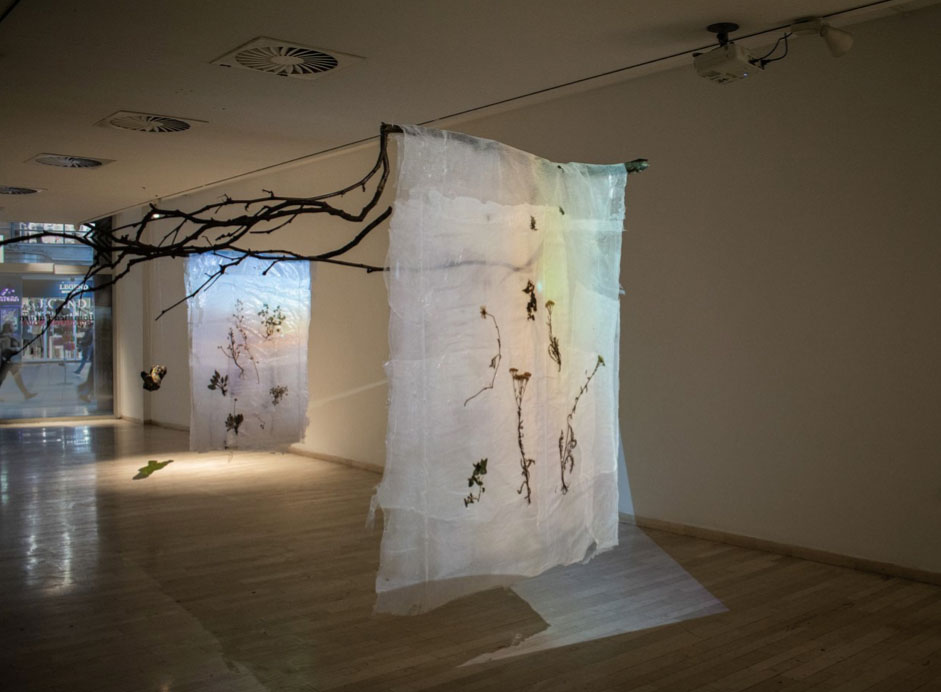
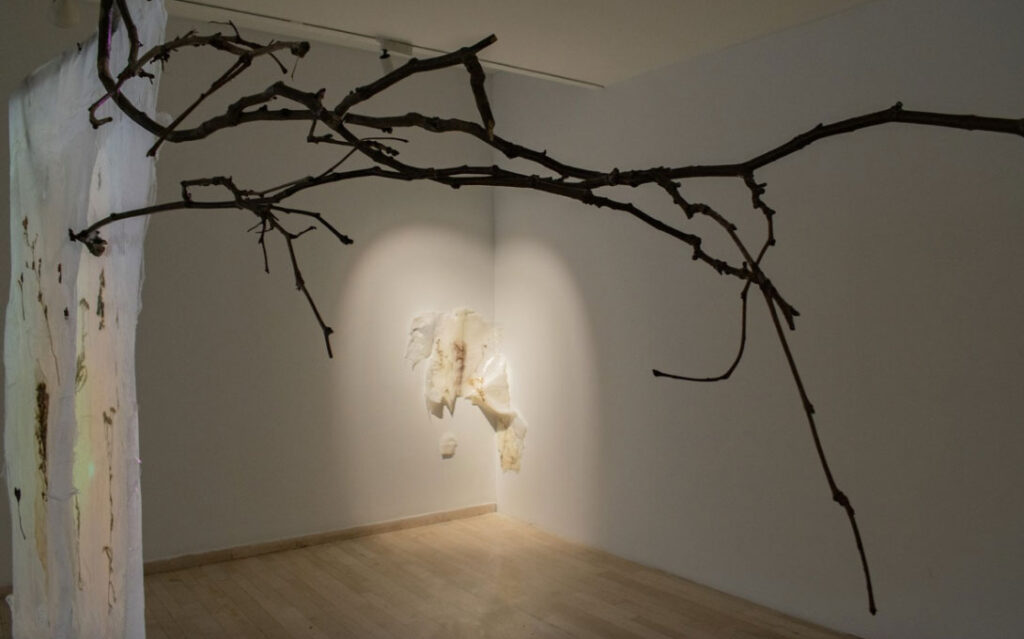
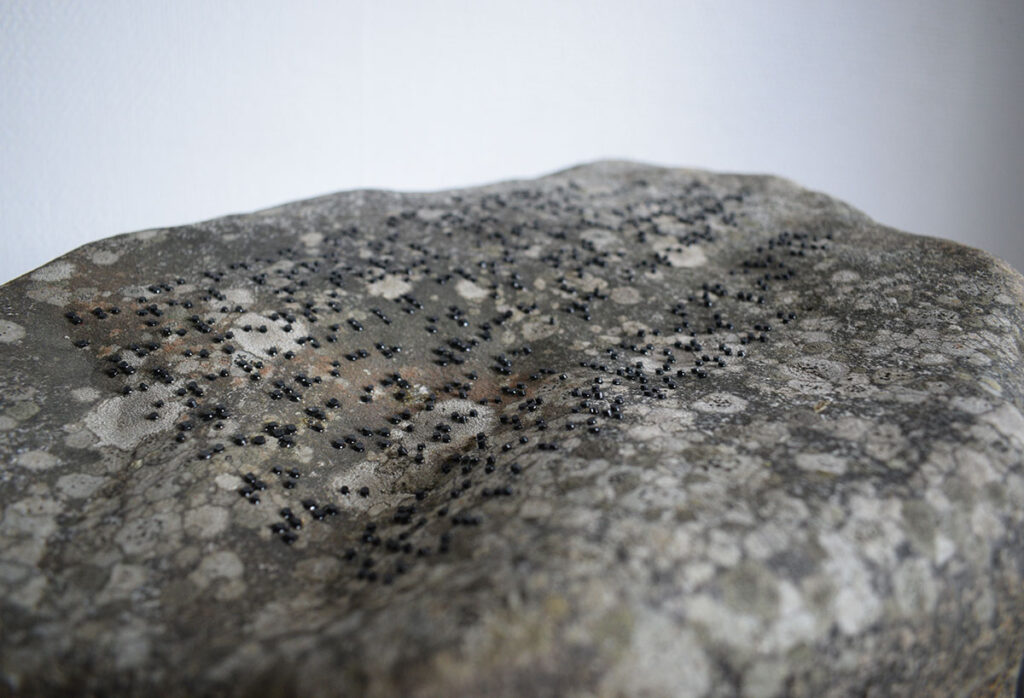
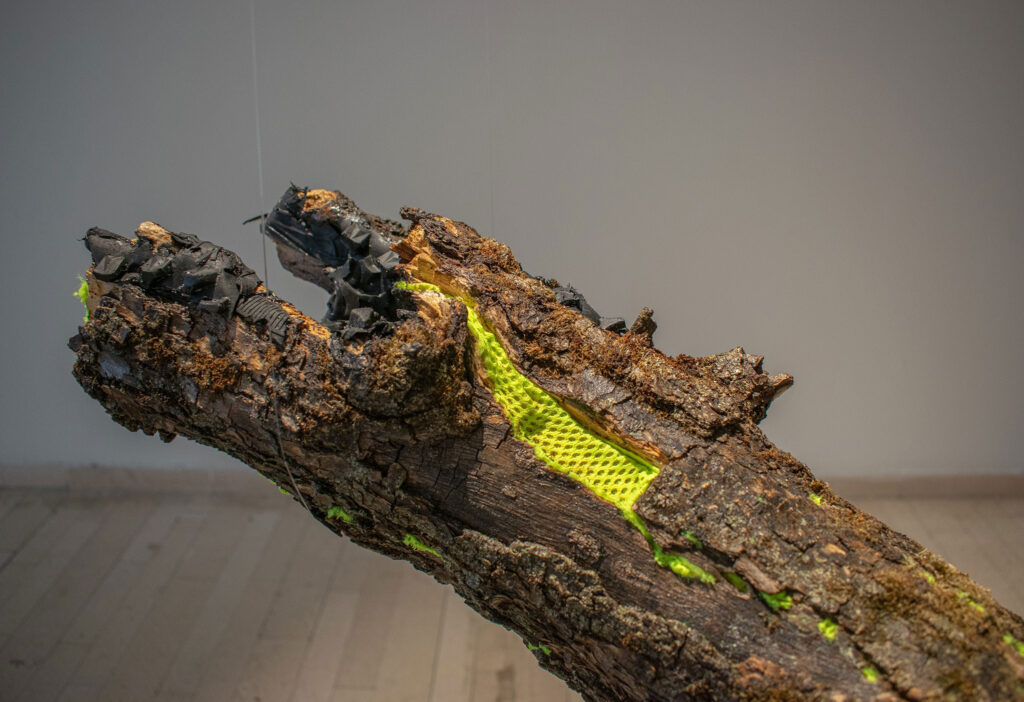
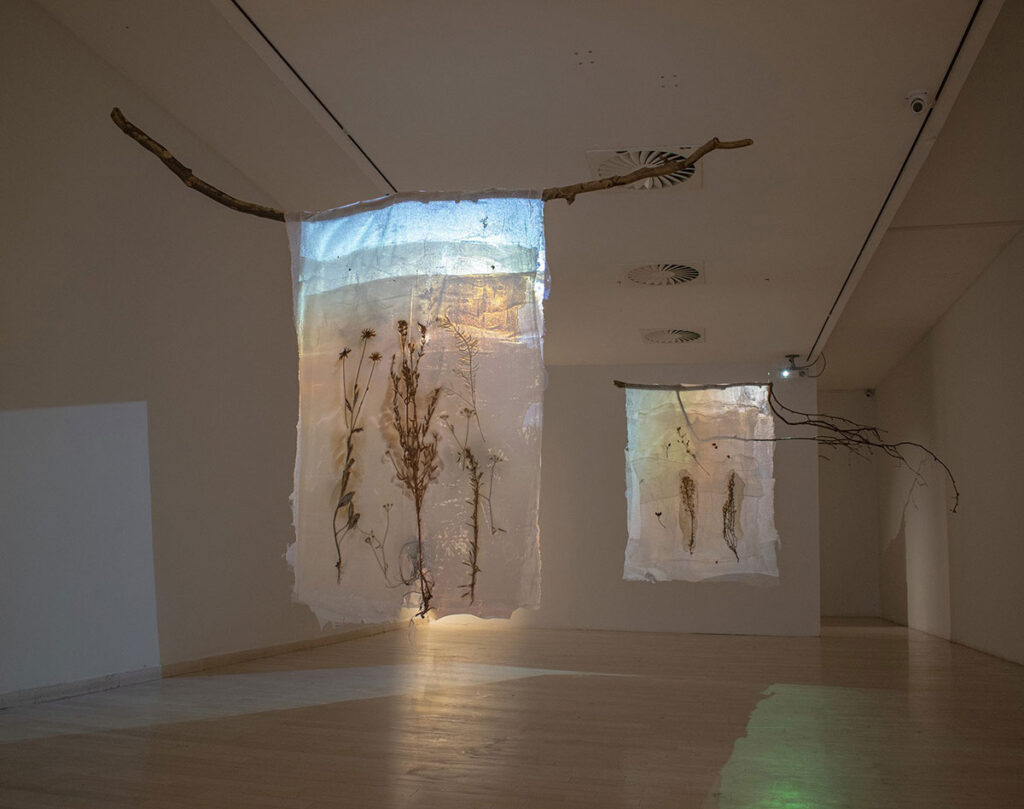
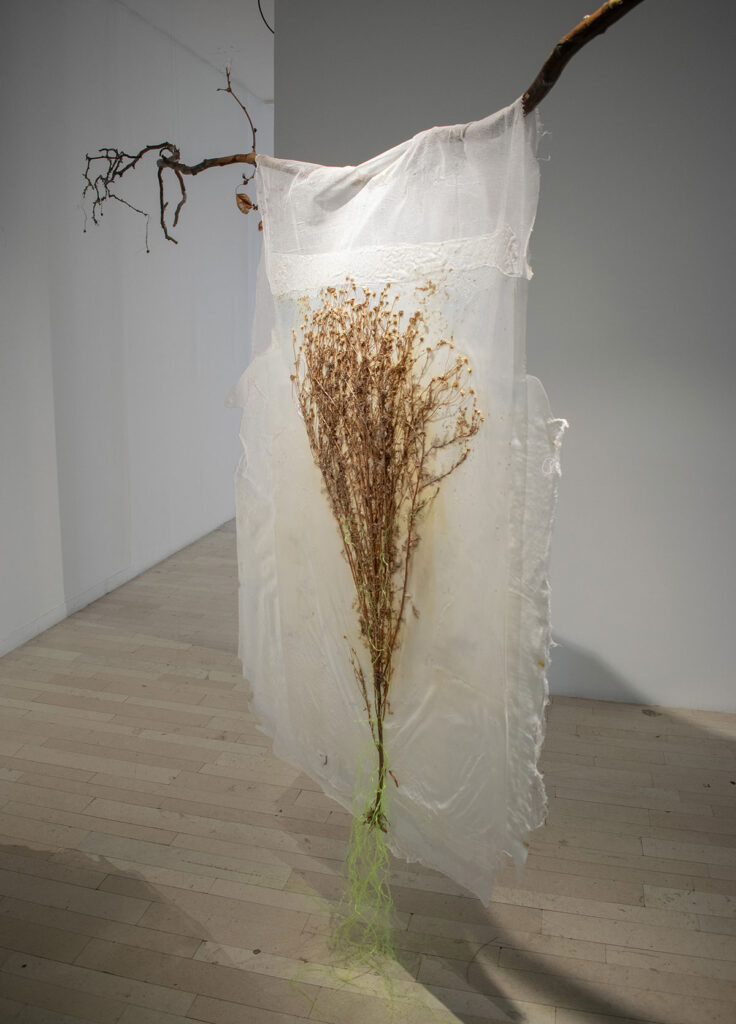
Hortus futuri koji gradi aludira da će ta budućnost pre svega biti mesto preplitanja, novih simbiotskih struktura i relacija, a Ana Vujović na sebe preuzima ulogu arhivarke i aktivne spekulantkinje. Proširujući verovanje da je “ekozofska problematika, na kraju krajeva, problematika proizvodnje ljudske egzistencije u novim istorijskim okvirima”[6] i na druge non-human oblike egzistencije, Ana gradi vrt budućnosti, i nove oblike postojanja, gde prirodni i veštački elementi dolaze u neverovatno blizak odnos, u kom nije sasvim izvesno koja strana pokušava da nadvlada i integriše koju. Odnos plastike i prirode stoji u zavodljivoj igri akumulacije, preklapanja, naizmeničnog poništavanja i prihvatanja i međusobne apsorpcije, a Ana ga vešto odvodi u apsolutni ekstrem u kom pretpostavlja budućnost u kojoj je plastika postala integrativni deo zemlje. Rastopljena guma je pronašla svoj put kroz koren biljaka, uvukla se u svaku poru i sada zajedno sa njima raste, silikonske interpolacije menjuju strukturu drveta i zamenjuju njegove elemente, sintetika cveta iz šupljina naprslih grana, a borbene, samonikle, lekovite biljke su ostale bez vazduha, zarobljene u nemogućnosti da ispune svoju primarnu funkciju.
Međutim, i pored distopijske atmosfere i zastrašujuće alarmantnosti kojom odiše ovaj herbarijum budućnosti, Ana Vujović nas ne ostavlja bez nade. Suočava nas sa činjenicom da bi bilo nepojmljivo, a sada već svakako i nemoguće, vratiti se na prethodne obrasce i sisteme, ali istovremeno i da se možda i naš zadatak usput promenio. Možda on više i nije povratak na staro i razrešavanje suprotnosti već učenje novog saživota, građenje nove solidarnosti, nove blagosti, novog razumevanja, nove fleksibilnosti, novih interakcija, podsećajući da to znači i neočekivane susrete jer “preživljavanje—za svaku vrstu—podrazumeva podnošljive saradnje”[7].
[1] Heather Davis, Plastic Matter, Duke University Press, Daram; 2022. str 1
[2] Godišnje se proizvede više od 380 miliona tona plastike, od čega se samo 9% reciklira. Podaci: https://plasticoceans.org/the-facts/ ; https://ourworldindata.org/plastic-pollution
Poslednji put pristupljeno: 9.2.2024.
[3] pr.autorke: sintetika potiče od grčke reči syntithenai (sastati se)
[4] Heather Davis, Plastic Matter, Duke University Press, Durham; 2022. str 10
[5] Feliks Gatari, Tri ekologije, FMK, Beograd; 2021. str 20
[6] Feliks Gatari, Tri ekologije, FMK, Beograd; 2021. str 14
[7] Anna Lowenhaupt Tsing, The Mushroom at the End of the World: On the Possibility of Life in Capitalist Ruins, Princeton University Press, New Jersey; 2015.
It is seductive to think about the end of the world; to engage in predictions and speculations on all the ways it could spectacularly fall apart, whether it would happen suddenly or gradually, how many small disappearances must occur before the big one, and of course, the inevitable: what comes after? If it was not, we wouldn’t collectively be so obsessed with apocalyptic scenarios and the idea of an impending catastrophe, constantly and persistently trying to figure it out and prepare for it. It’s not all that unusual. The world can burn in countless ways, but it is in human nature desire to predict them all. Unfortunately, the fact that we continuously prepare for a major disaster does not prevent us from causing it ourselves. It seems that we are so frequently confronted with endings and cataclysms that sometimes it truly feels like we are living in a time that can only be called ultimate, yet we remain persistently indifferent, and unaware of our own role and individual responsibility. However, in that fatal passivity, we must be cautious. What is supposed to happen may have already had.
Colonialisms, financial and extractive capitalism, environmental disasters, pollution, deforestation, fuel combustion and excessive carbon production, global warming, rising ocean temperature, biodiversity of all waters seriously threatened for the first time by new, mysterious pathogens. All these are synonyms for apocalypse, which we refuse to accept and which is essentially a result of the anthropogenic factor, and it is almost impossible to find just one cause for it. In a time when the dominant model of economic interaction and exchange is capitalist, and the ideology of the free market is a perpetuum mobile that keeps us trapped in (self)exploitative practices, capital is the main agent that defines the dynamics of relationships and the new world ecology that connects us all. Capitalocene has brought about the dispersion of responsibilities, polymorphic centres of power, a series of intertwined cause-and-effect relationships and positions where nemesis has ceased to be a singular category, but is rather a machinery similar to the mythological Hydra, whose heads are impossible to fully discern.
In such a world, plastic occupies a quite special place, and its flexibility, usability and transgressive nature make it an emblematic example of blurred boundaries. Because “plastic is not just any material but is emblematic of material relations in the twentieth and twenty-first centuries, showing how intimately oil has coated nearly every fabric of being, how the synthetic cannot be disentangled from the natural, and how a generalized toxicity is producing queer realities.”[1] We are now fully living what Guattari warned about decades ago: that now more than ever, nature cannot be separated from culture, and that, in order to comprehend the interactions between eco-systems, we must learn to think transversally. At the moment when we speak about it, plastic is found in almost everything that surrounds us. It seduces us with its amorphous, sticky, smooth surfaces and the promise of sterility; it is produced in astronomical quantities[2], it can be found in the air we breathe, the water we drink, circulating through our bodies in its micro form, and penetrating our cells in its nano form. We are united in a synthetic that has never been so multifariously close to its original meaning[3], and it has become almost impossible to keep a clear division between the artificial and the natural world.
Ana Vujović’s work also addresses these encounters, the disruption of clearly defined boundaries, transitional environments, and the endless series of transformations and mutations of matter, as a creative response of the still living world to evolutionary processes[4]. Her works reveal complex interdependent ecologies: social, mental and environment ecology that Guattari writes about, and raise the question of the legacy that our neglect of these ecologies has left us, but more importantly, what will be the legacy that we leave behind?
Aware of the fact that “it would be absurd to want to return to the past in order to reconstruct former ways of living”[5], Ana, through the methodology of her previous works, unravels relationships, untangles complex influences, questions today’s conditions and the possibilities of (co)existence within them, returning from this journey with new questions and assumptions. If the reality of venturing into nature today is often similar to an experience where healing herbs alternate with garbage in such a regular rhythm that they almost coexist in a strange game, then it is not difficult to imagine the consequences of decades of such coexistence. Humanity has left its own trace in the shift of geological epochs in an unprecedentedly destructive manner, and although we still do not know with certainty what it will entail, it is quite certain that the future ahead of us will be completely different from everything that has preceded it.
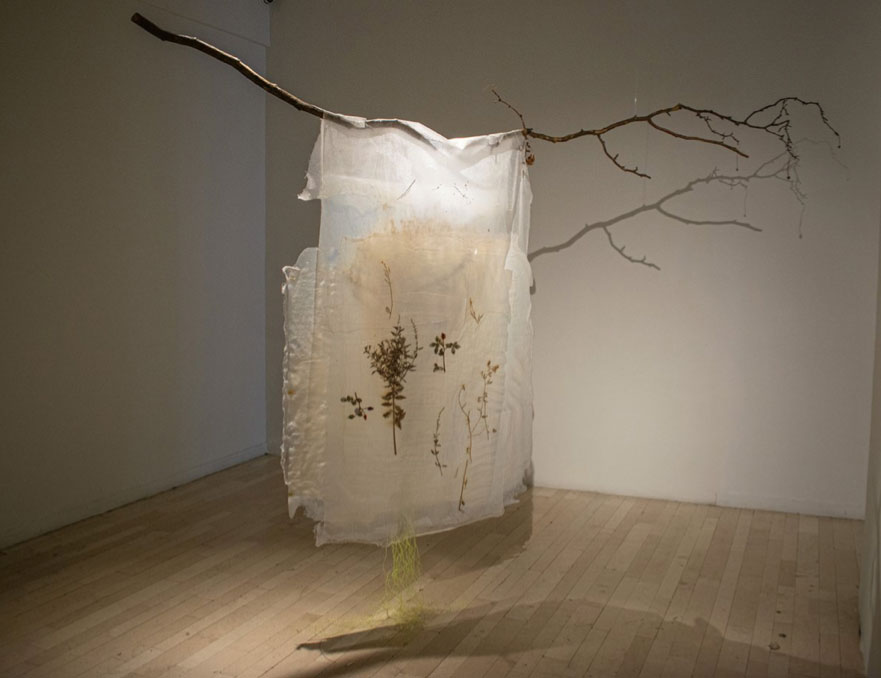
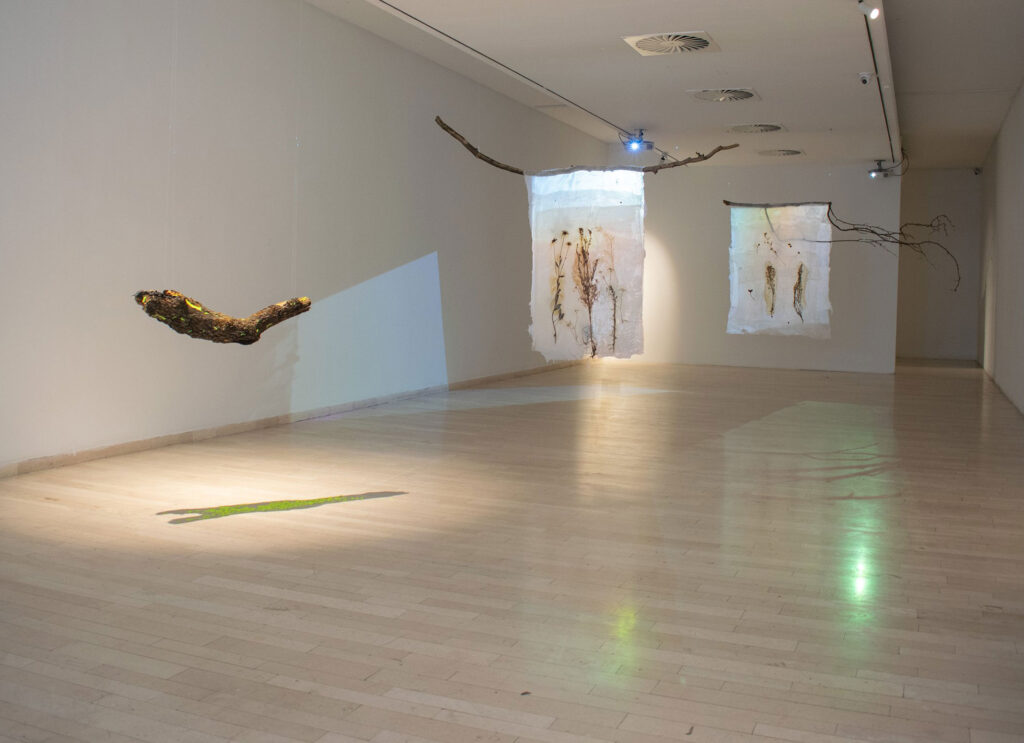
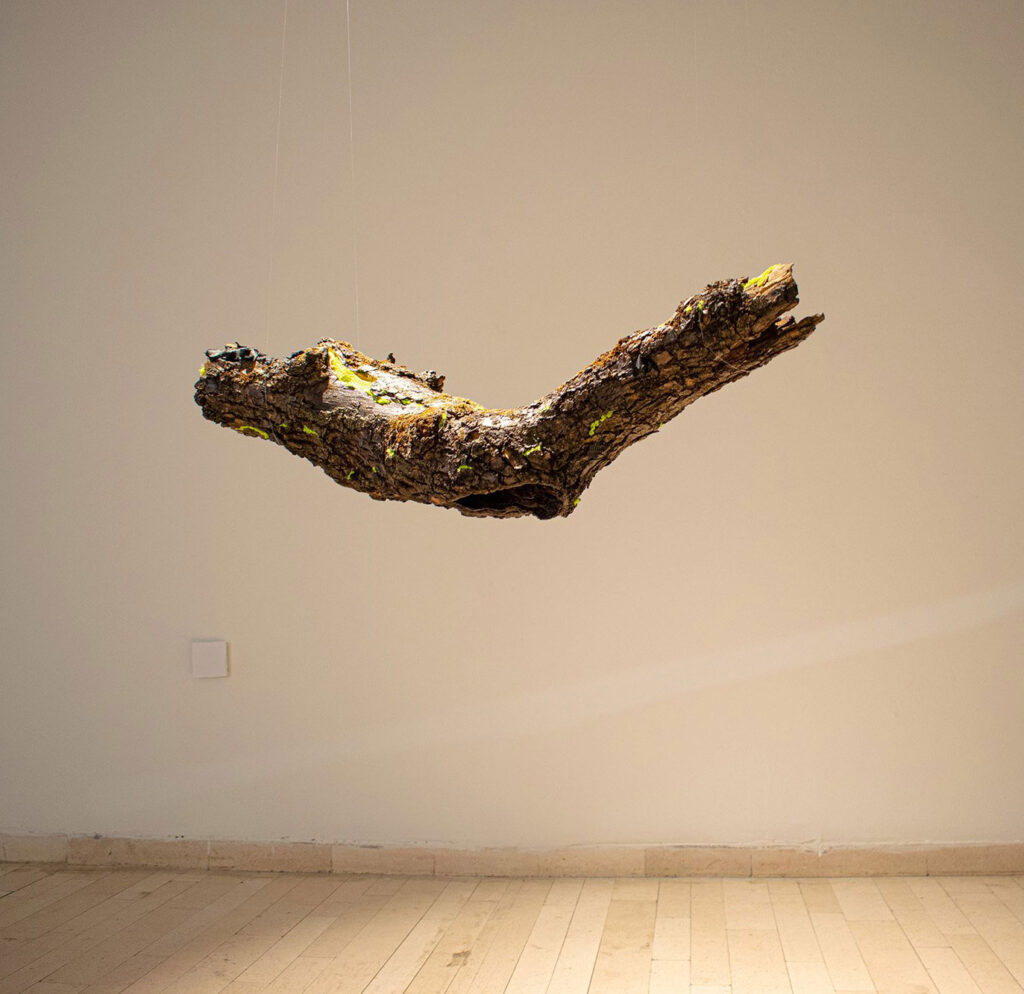
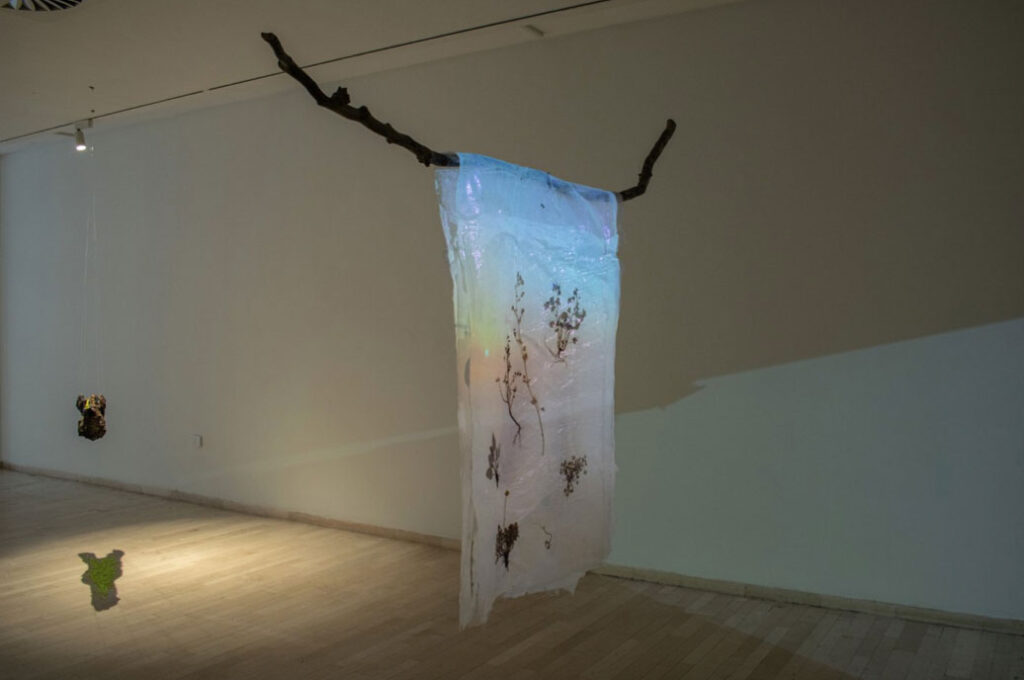
The hortus futurus that Ana Vujović builds suggests that future will primarily be a place of interweaving, of new symbiotic structures and relationships, and she takes on the role of an archivist and active speculator. Extending the belief that “the ecosophic problematic is that of the production of human existence itself in new historical contexts”[6] to other non-human forms of existence, Ana constructs a garden of the future, and new forms of existence, where natural and artificial elements come into an incredibly close relationship, in which it is not entirely certain which side is trying to dominate and integrate the other. The relationship between plastic and nature exists in a seductive game of accumulation, overlapping, alternating nullification, acceptance and mutual absorption, and Ana adeptly takes it to an absolute extreme where she envisions a future in which plastic has become an integral part of the earth. Melted rubber has found its way through plant roots, infiltrating every pore, and now grows with them; silicone interpolations alter the structure of wood and replace its elements, synthetics bloom from the crevices of cracked branches, resilient, wild, medicinal plants are left without air, trapped in the inability to fulfil their primary function.
However, despite the dystopian atmosphere and terrifying alarmism emanating from this herbarium of the future, Ana Vujović does not leave us without hope. She confronts us with the fact that it would be inconceivable, and now certainly impossible, to return to previous patterns and systems, but at the same time, that perhaps our task has also changed along the way. Maybe it is no longer about returning to the old and resolving contradictions, but rather about learning to coexist anew, building new solidarity, new gentleness, new understanding, new flexibility, new interactions, reminding us that this also means unexpected encounters because “staying alive—for every species—requires livable collaborations”. [7]
[1] Heather Davis, Plastic Matter, Duke University Press, Daram; 2022, p. 1
[2] More than 380 million tons of plastic are produced annually, of which only 9% is recycled. Data: https://plasticoceans.org/the-facts/ ; https://ourworldindata.org/plastic-pollution
Last accessed on Feb. 9, 2024.
[3] A/N: The word “synthetic” stems from the Greek word “syntithenai” (meaning “to meet”).
[4] Heather Davis, Plastic Matter, Duke University Press, Durham; 2022, p. 10
[5] Feliks Gatari, Tri ekologije, FMK, Beograd; 2021, p. 20
[6] Feliks Gatari, Tri ekologije, FMK, Beograd; 2021, p. 14
[7] Anna Lowenhaupt Tsing, The Mushroom at the End of the World: On the Possibility of Life in Capitalist Ruins, Princeton University Press, New Jersey; 2015
READ CURATORIAL CONCEPT
Zavodljivo je misliti o kraju sveta. Zanimati se predikcijama i spekulacijama na koje sve načine bi on spektakularno mogao da propadne, da li bi se to desilo odjednom ili postepeno, koliko malih nestajanja mora da se desi pre jednog velikog, i naravno, ono neizostavno, šta će biti posle? Da nije, ne bismo kolektivno bili opsednuti apokaliptičnim scenarijima i idejom o nadolazećoj katastrofi i konstantno i uporno pokušavali da je osmislimo i pripremimo se za nju. Nije to ni tako neobično. Svet može da gori na bezbroj načina, ali je u ljudskoj prirodi želja da ih sve predvidi. Nažalost, činjenica da se kontinuirano spremamo za veliku propast nas nimalo ne sprečava da je sami prouzrokujemo. Čini se da se toliko učestalo suočavamo sa završecima i kataklizmama, da nekada zaista deluje da živimo u vremenu koje se jedino može nazvati krajnjim pri čemu ostajemo istrajno ravnodušni, i nesvesni sopstvene uloge i individualne odgovornosti. Međutim, u toj fatalnoj pasivnosti moramo biti obazrivi. Ono što treba da se desi se možda već i dogodilo.
Kolonijalizmi, finansijski i ekstraktivni kapitalizam, ekološke katastrofe, zagađenje, deforestacija, sagorevanje goriva te prekomerna proizvodnja ugljenika, globalno zagrevanje, porast temperature vode u okeanima, biodiverzitet svih voda koji je po prvi put ozbiljno ugrožen novim, misterioznim patogenima. Sve su to sinonimi za apokalipsu, koju odbijamo da prihvatimo a koja je po svojoj prirodi rezultat antropogenog faktora, i kojoj je gotovo nemoguće pronaći samo jedan uzrok. U trenutku u kom je dominantni model ekonomske interakcije i razmene kapitalistički, a ideologija slobodnog tržišta perpetum mobile koji nas drži zarobljenim u (samo)eksploatativnim praksama, kapital jeste glavni agens koji definiše dinamiku odnosa, pa i nova svetska ekologija koja nas spaja. Kapitalocen je doneo raspršivanje odgovornosti, polimorfne centre moći, niz isprepletanih uzročno posledičnih odnosa i pozicija gde nemezis odavno nije singularna kategorija, već daleko pre mašinerija nalik mitološkoj Hidri čije je glave nemoguće u potpunosti razaznati.
U takvom svetu, plastika zauzima sasvim posebno mesto a njena fleksibilnost, upotrebljivost i transgresivna priroda čine je amblematskim primerom zamagljenosti granica. Jer plastika “nije samo bilo koji materijal, već simbol materijalnih odnosa u 20. i 21. veku, koji pokazuje kako je nafta prekrila gotovo svaki oblik postojanja, kako se sintetičko ne može razdvojiti od prirodnog i kako sveprisutna toksičnost kreira novu, queer realnosti”[1]. Ono na šta je i Gatari upozoravao decenijama unazad, da se više nego ikada pre priroda ne može razdvojiti od kulture i da bismo razumeli interakcije ekosistema moramo da naučimo da mislimo transverzalno, sada u potpunosti živimo. U trenutku u kom govorimo o njoj, plastika se nalazi u gotovo svemu što nas okružuje. Zavodi nas svojim amorfnim, lepljivim, glatkim površinama i obećanjem sterilnosti, proizvodi se u astronomskim količinama[2], nalazi se u vazduhu koji dišemo, vodi koju pijemo, u svom mikro obliku cirkuliše kroz naša tela, a u nano penetrira naše ćelije. Ujedinjeni smo u sintetitici koja nikada nije bila ovako višeslojno bliska svom izvornom značenju[3], i postalo je gotovo nemoguće održati jasnu podelu između veštačkog i prirodnog sveta.
Upravo o tim susretima, narušavanju jasno definisanih granica, tranzicionim okruženjima, i beskrajnom nizu transformacija i mutacija materije, kao kreativnog odgovora još uvek živog sveta na evolutivne procese[4] govori i Ana Vujović. Njeni radovi otkrivaju kompleksne međuzavisne ekologije: društvenu, mentalnu i ekologiju prirodnog okruženja o kojima govori Gatari, i otvaraju pitanje nasleđa koje nam je nebriga o ovim ekologijama ostavila, ali i još važnije, kakvo će tek biti ono koje ostaje iza nas?
Svesna činjenice da bi “bilo apsurdno želeti hod unazad kako bi se pokušali rekonstruisati nekadašnji načini života”[5] Ana, metodlogijom prethodnih radova, raspliće odnose, razvezuje zamršene uticaje, propituje današnje uslove i mogućnosti (sa)života u njima, vraćajući se sa tog puta sa novim pitanjima i pretpostavkama. Ako je realnost odlaska u prirodu danas neretko jednaka iskustvu u kom se lekovito bilje smenjuje sa đubretom u tako pravilnom ritmu da gotovo kao da koegzistiraju u nekoj začudnoj igri, onda nije teško zamisliti posledice decenija takve koegzistencije. Čovečanstvo je sopstveni trag u smeni geoloških epoha ostavilo na dosad neviđeno destruktivan način, i iako još uvek ne znamo sa sigurnošću kakva, prilično je izvesno da će budućnost koja je pred nama, biti potpuno drugačija od svega što joj je prethodilo.
Hortus futuri koji gradi aludira da će ta budućnost pre svega biti mesto preplitanja, novih simbiotskih struktura i relacija, a Ana Vujović na sebe preuzima ulogu arhivarke i aktivne spekulantkinje. Proširujući verovanje da je “ekozofska problematika, na kraju krajeva, problematika proizvodnje ljudske egzistencije u novim istorijskim okvirima”[6] i na druge non-human oblike egzistencije, Ana gradi vrt budućnosti, i nove oblike postojanja, gde prirodni i veštački elementi dolaze u neverovatno blizak odnos, u kom nije sasvim izvesno koja strana pokušava da nadvlada i integriše koju. Odnos plastike i prirode stoji u zavodljivoj igri akumulacije, preklapanja, naizmeničnog poništavanja i prihvatanja i međusobne apsorpcije, a Ana ga vešto odvodi u apsolutni ekstrem u kom pretpostavlja budućnost u kojoj je plastika postala integrativni deo zemlje. Rastopljena guma je pronašla svoj put kroz koren biljaka, uvukla se u svaku poru i sada zajedno sa njima raste, silikonske interpolacije menjuju strukturu drveta i zamenjuju njegove elemente, sintetika cveta iz šupljina naprslih grana, a borbene, samonikle, lekovite biljke su ostale bez vazduha, zarobljene u nemogućnosti da ispune svoju primarnu funkciju.
Međutim, i pored distopijske atmosfere i zastrašujuće alarmantnosti kojom odiše ovaj herbarijum budućnosti, Ana Vujović nas ne ostavlja bez nade. Suočava nas sa činjenicom da bi bilo nepojmljivo, a sada već svakako i nemoguće, vratiti se na prethodne obrasce i sisteme, ali istovremeno i da se možda i naš zadatak usput promenio. Možda on više i nije povratak na staro i razrešavanje suprotnosti već učenje novog saživota, građenje nove solidarnosti, nove blagosti, novog razumevanja, nove fleksibilnosti, novih interakcija, podsećajući da to znači i neočekivane susrete jer “preživljavanje—za svaku vrstu—podrazumeva podnošljive saradnje”[7].
[1] Heather Davis, Plastic Matter, Duke University Press, Daram; 2022. str 1
[2] Godišnje se proizvede više od 380 miliona tona plastike, od čega se samo 9% reciklira. Podaci: https://plasticoceans.org/the-facts/ ; https://ourworldindata.org/plastic-pollution
Poslednji put pristupljeno: 9.2.2024.
[3] pr.autorke: sintetika potiče od grčke reči syntithenai (sastati se)
[4] Heather Davis, Plastic Matter, Duke University Press, Durham; 2022. str 10
[5] Feliks Gatari, Tri ekologije, FMK, Beograd; 2021. str 20
[6] Feliks Gatari, Tri ekologije, FMK, Beograd; 2021. str 14
[7] Anna Lowenhaupt Tsing, The Mushroom at the End of the World: On the Possibility of Life in Capitalist Ruins, Princeton University Press, New Jersey; 2015.
It is seductive to think about the end of the world; to engage in predictions and speculations on all the ways it could spectacularly fall apart, whether it would happen suddenly or gradually, how many small disappearances must occur before the big one, and of course, the inevitable: what comes after? If it was not, we wouldn’t collectively be so obsessed with apocalyptic scenarios and the idea of an impending catastrophe, constantly and persistently trying to figure it out and prepare for it. It’s not all that unusual. The world can burn in countless ways, but it is in human nature to desire to predict them all. Unfortunately, the fact that we continuously prepare for a major disaster does not prevent us from causing it ourselves. It seems that we are so frequently confronted with endings and cataclysms that sometimes it truly feels like we are living in a time that can only be called ultimate, yet we remain persistently indifferent, and unaware of our own role and individual responsibility. However, in that fatal passivity, we must be cautious. What is supposed to happen may have already had.
Colonialisms, financial and extractive capitalism, environmental disasters, pollution, deforestation, fuel combustion and excessive carbon production, global warming, rising ocean temperature, biodiversity of all waters seriously threatened for the first time by new, mysterious pathogens. All these are synonyms for apocalypse, which we refuse to accept and which is essentially a result of the anthropogenic factor, and it is almost impossible to find just one cause for it. In a time when the dominant model of economic interaction and exchange is capitalist, and the ideology of the free market is a perpetuum mobile that keeps us trapped in (self)exploitative practices, capital is the main agent that defines the dynamics of relationships and the new world ecology that connects us all. Capitalocene has brought about the dispersion of responsibilities, polymorphic centres of power, a series of intertwined cause-and-effect relationships and positions where nemesis has ceased to be a singular category, but is rather a machinery similar to the mythological Hydra, whose heads are impossible to fully discern.
In such a world, plastic occupies a quite special place, and its flexibility, usability and transgressive nature make it an emblematic example of blurred boundaries. Because “plastic is not just any material but is emblematic of material relations in the twentieth and twenty-first centuries, showing how intimately oil has coated nearly every fabric of being, how the synthetic cannot be disentangled from the natural, and how a generalized toxicity is producing queer realities.”[1] We are now fully living what Guattari warned about decades ago: that now more than ever, nature cannot be separated from culture, and that, in order to comprehend the interactions between eco-systems, we must learn to think transversally. At the moment when we speak about it, plastic is found in almost everything that surrounds us. It seduces us with its amorphous, sticky, smooth surfaces and the promise of sterility; it is produced in astronomical quantities[2], it is found in the air we breathe, the water we drink, circulating through our bodies in its micro form, and penetrating our cells in its nano form. We are united in a synthetic that has never been so multifariously close to its original meaning[3], and it has become almost impossible to keep a clear division between the artificial and the natural world.
Ana Vujović’s work also addresses these meetings, the disruption of clearly defined boundaries, transitional environments, and the endless series of transformations and mutations of matter, as a creative response of the still living world to evolutionary processes[4]. Her works reveal complex interdependent ecologies: social, mental and environment ecology that Guattari writes about, and raise the question of the legacy that our neglect of these ecologies has left us, but more importantly, what will be the legacy that we leave behind?
Aware of the fact that “it would be absurd to want to return to the past in order to reconstruct former ways of living”[5], Ana, through the methodology of her previous works, unravels relationships, untangles complex influences, questions today’s conditions and the possibilities of (co)existence within them, returning from this journey with new questions and assumptions. If the reality of venturing into nature today is often similar to an experience where medicinal plants alternate with garbage in such a regular rhythm that they almost coexist in a strange game, then it is not difficult to imagine the consequences of decades of such coexistence. Humanity has left its own trace in the shift of geological epochs in an unprecedentedly destructive manner, and although we still do not know with certainty what it will entail, it is quite certain that the future ahead of us will be completely different from everything that has preceded it.
The hortus futurus that Ana Vujović is building suggests that future will primarily be a place of interweaving, of new symbiotic structures and relationships, and she takes on the role of an archivist and active speculator. Extending the belief that “the ecosophic problematic is that of the production of human existence itself in new historical contexts”[6] to other non-human forms of existence, Ana constructs a garden of the future, and new forms of existence, where natural and artificial elements come into an incredibly close relationship, in which it is not entirely certain which side is trying to dominate and integrate the other. The relationship between plastic and nature exists in a seductive game of accumulation, overlapping, alternating nullification, acceptance and mutual absorption, and Ana adeptly takes it to an absolute extreme where she envisions a future in which plastic has become an integral part of the earth. Melted rubber has found its way through plant roots, infiltrating every pore, and now grows with them; silicone interpolations alter the structure of wood and replace its elements, synthetics bloom from the crevices of cracked branches, resilient, wild, medicinal plants are left without air, trapped in the inability to fulfil their primary function.
However, despite the dystopian atmosphere and terrifying alarmism emanating from this herbarium of the future, Ana Vujović does not leave us without hope. She confronts us with the fact that it would be inconceivable, and now certainly impossible, to return to previous patterns and systems, but at the same time, that perhaps our task has also changed along the way. Maybe it is no longer about returning to the old and resolving contradictions, but rather about learning to coexist anew, building new solidarity, new gentleness, new understanding, new flexibility, new interactions, reminding us that this also means unexpected encounters because “staying alive—for every species—requires livable collaborations”. [7]
[1] Heather Davis, Plastic Matter, Duke University Press, Daram; 2022, p. 1
[2] More than 380 million tons of plastic are produced annually, of which only 9% is recycled. Data: https://plasticoceans.org/the-facts/ ; https://ourworldindata.org/plastic-pollution
Last accessed on Feb. 9, 2024.
[3] A/N: The word “synthetic” stems from the Greek word “syntithenai” (meaning “to meet”).
[4] Heather Davis, Plastic Matter, Duke University Press, Durham; 2022, p. 10
[5] Feliks Gatari, Tri ekologije, FMK, Beograd; 2021, p. 20
[6] Feliks Gatari, Tri ekologije, FMK, Beograd; 2021, p. 14
[7] Anna Lowenhaupt Tsing, The Mushroom at the End of the World: On the Possibility of Life in Capitalist Ruins, Princeton University Press, New Jersey; 2015